Bay Area Transit Loan: What $590M Actually Buys
California's $590 million loan keeps BART, Caltrain, Muni and AC Transit running through the new fiscal year. It is a one-year bridge to the November vote, not a fix, and that changes what a transit-rich address is really worth right now.
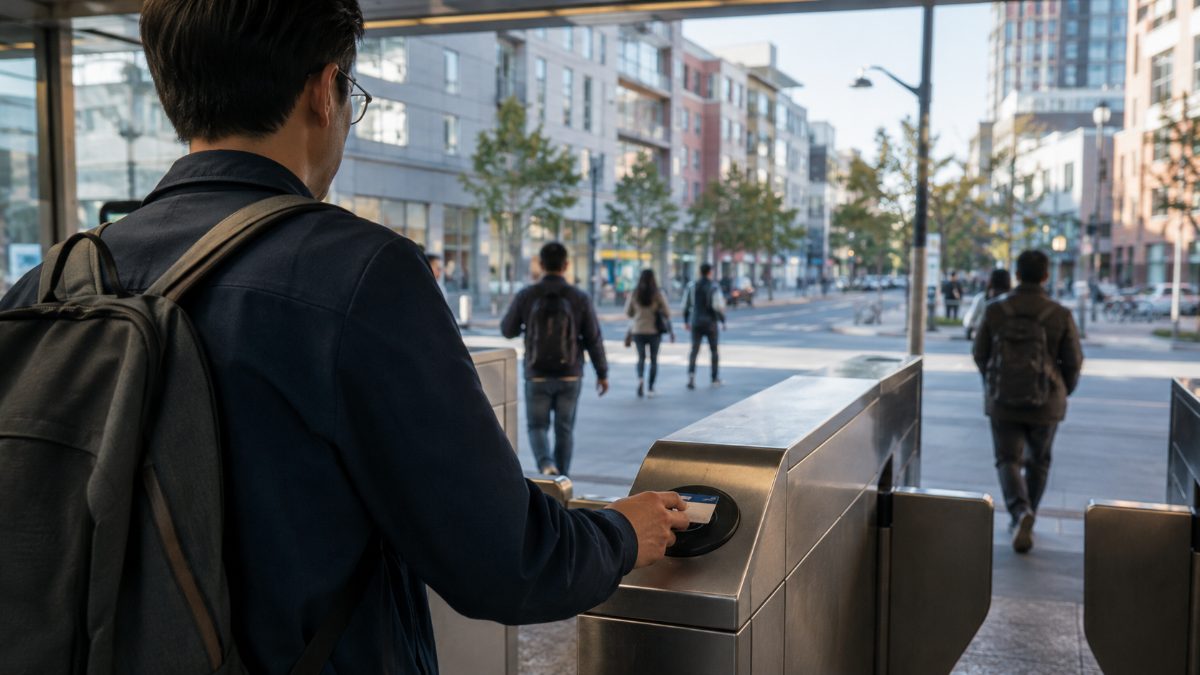
A morning commuter taps a fare card at a Bay Area transit station faregate, illustrating the $590 million Bay Area transit loan keeping BART, Caltrain and Muni running. Photo: Houseberry
The number is $590 million. The deadline is July 1. On the first day of the new fiscal year, a state loan starts reaching BART, Caltrain, Muni and AC Transit, and the doomsday service plans that have sat on the shelf for months go back in a drawer. For one year.
That last part is worth reading twice. The Bay Area transit loan that Governor Newsom signed in February is not new money the agencies get to keep. It is a bridge, borrowed against the state's own transit capital fund, and it covers exactly one fiscal year while the region decides in November whether to tax itself to keep the trains running past 2027. If you own or are shopping for a home near a station, the headline to resist is “crisis averted.” What actually happened is the clock got reset, not stopped.
What the Bay Area transit loan actually does
The structure is the story. The California State Transportation Agency is lending $590 million to the Metropolitan Transportation Commission out of the Transit and Intercity Rail Capital Program, the pot normally reserved for building things, according to the Governor's office. MTC then passes it through as short-term operating loans to the four agencies. The rough split:
| Agency | Share of the $590M loan |
|---|---|
| BART | $285 million |
| Muni (SFMTA) | $200 million |
| AC Transit | $55 million |
| Caltrain | $50 million |
BART takes the largest share at $285 million, Muni $200 million, with AC Transit and Caltrain splitting the rest, as KTVU reported. Those four agencies face a combined operating deficit north of $800 million next year, per MTC, so $590 million does not erase the hole. It gets them through it. The terms read like the emergency backstop they are. A twelve-year repayment to the state, interest-only for the first two years, secured by pledging each agency's State Transit Assistance dollars, as the Governor's office spelled out. In plain terms, the agencies pay this back out of future transit funding they would otherwise spend on transit.
The handoff nobody is circling on the calendar
Line the dates up and the design gets obvious. The loan covers the 2026-27 fiscal year. The sales tax from Senate Bill 63, the measure that may reach voters in five counties this November, would not send a dollar until around July 2027, MTC says. One leg of the relay is meant to drop off right where the next picks up. The loan is only the first leg.
So the November vote is not less important now. It is more. Pass it, and the new revenue lands just as the loan's interest-only grace period ends, giving the system a real funding source again. Reject it, and the agencies reach July 2027 with no bridge, no new tax, and a loan they still owe out of the same money that keeps buses on the road. That is the split-screen BART keeps sketching in its budget, two scenarios side by side: one built on new revenue and efficiencies, the other on service reductions, station closures, fare increases, and layoffs. The loan bought a year to avoid that choice. It did not make the choice disappear.
What it means for transit-rich neighborhoods
For anyone comparing neighborhoods, this is where it turns practical. Transit access is one of the steadier things propping up demand in a soft market, and “walkable to BART” or “ten minutes to Caltrain” still earns a real premium in listing copy. The loan keeps that premium intact through the new fiscal year. It does not make it permanent.
The way we look at it when we compare neighborhoods, a transit-rich address is usually worth paying for. But that value now rides on service funded one year at a time. A home among the top-ranked East Bay neighborhoods sits on the BART and AC Transit lines this loan is keeping whole. A place along the Caltrain spine down the Peninsula leans on the agency that just called itself the fastest-growing in the country. Same loan, same November vote, same fine print. None of it shows up in an automated price estimate.
It lines up with SB 79, the transit-density law taking effect July 1. The state is legalizing more housing near frequent transit on the very day this loan keeps that transit frequent. The two bets only pay off together. If you are weighing a transit-rich address against a car-dependent one right now, the honest read is that you are partly betting on an election.
Watch November, not the headline
None of this is a reason to strike a station-adjacent neighborhood off the list. BART is posting some of its highest-ever marks for safety and satisfaction, and Caltrain ridership is up roughly 50 percent since electrification, state legislators noted, so the demand case is genuine. It is a reason to treat “near transit” as a question with a date attached rather than a fixed feature of the map. Watch whether SB 63 qualifies in your county, watch the November result, and price the address with both in view.
That is the whole reason we built Houseberry around the neighborhood before the listing. Schools, safety, amenities, value, and whether the train at the bottom of the hill is funded past next summer are the things that decide how a home actually lives day to day. The $590 million keeps the lights on for a year. November decides the rest.
A few questions buyers keep asking
Does the loan stop the BART and Muni service cuts?
For now, yes. The $590 million covers the 2026-27 fiscal year that starts July 1, so the agencies have shelved their deep-cut contingency plans for that year. The catch is that it is a one-year bridge, not a permanent fix, and the agencies still have to repay it out of future transit funding.
What happens to transit if the November measure fails?
The Senate Bill 63 sales tax is the revenue meant to take over when the loan year ends. If voters reject it, agencies reach mid-2027 with no replacement funding and a loan to repay, which is the scenario that puts service reductions, fare hikes, and possible station closures back on the table. Nothing is automatic, but the risk is real.
Does transit access still add to home value here?
It generally does, and a station-adjacent address still tends to hold demand better when the market softens. The honest caveat is that the premium now depends on service funded one year at a time. Comparing options across San Francisco neighborhoods or any transit corridor, treat funded frequency as one input alongside schools, safety, and price, not a guarantee.
Sources
Metropolitan Transportation Commission, Agreement Reached on Loan for Bay Area Transit Agencies
KTVU, California approves $590M loan for BART, Muni, Caltrain, AC Transit
All information provided on this website including but not limited to - school ratings, safety, amenities, user opinions, and property data - is for general informational purposes only. We do not guarantee its reliability, accuracy, or completeness. Users should independently verify information and consult appropriate professionals as needed. By using this website, you agree Houseberry is not responsible for actions, decisions, or consequences arising from reliance on the information provided
houseberry.com - CA DRE# 01847391
 Bay East ©2025. CCAR ©2025. bridgeMLS ©2025. Information Deemed Reliable But Not Guaranteed. This information is being provided by the Bay East MLS, or CCAR MLS, or bridgeMLS. The listings presented here may or may not be listed by the Broker/Agent operating this website. This information is intended for the personal use of consumers and may not be used for any purpose other than to identify prospective properties consumers may be interested in purchasing. Data last updated at September 26, 2026 12:00 AM