How Far Over Asking Are SF Homes Going in 2026
In the first half of 2026, 144 San Francisco homes sold at least $1 million over asking, up roughly 1,700 percent. Here is how far over asking SF homes are really going, and which neighborhoods are bidding hardest.

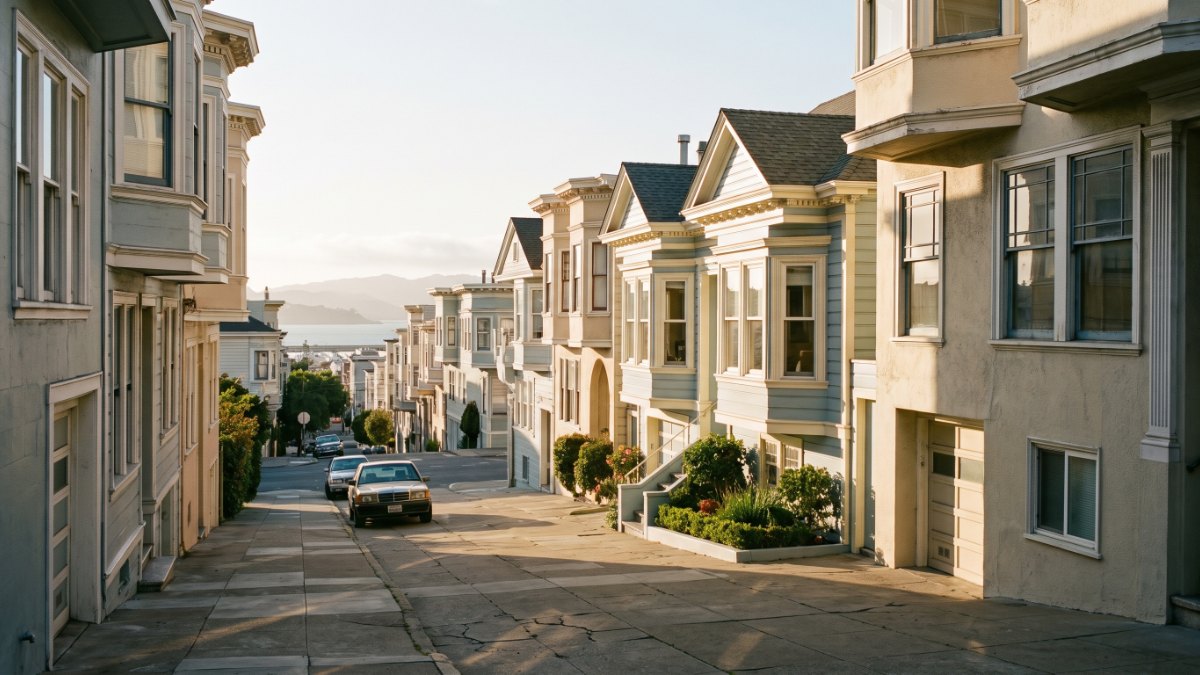
A steep Pacific Heights street of San Francisco single-family homes, in a 2026 market where San Francisco homes over asking have surged. Photo: Houseberry
When a Cow Hollow house listed at $8 million sold for nearly double that in May, it was easy to file the whole thing under rich-people problems and scroll on. Then the data caught up to the anecdote. In the first half of 2026, 144 San Francisco homes sold for at least $1 million over their asking price, according to brokerage Compass. In the first half of 2025, that number was eight.
Eight to 144. That is roughly a 1,700 percent jump, and it is the clearest sign yet that across a lot of San Francisco right now, the list price is barely a suggestion. If you are trying to figure out how far over asking SF homes are actually going in 2026, and which neighborhoods are worst, here is the honest version.
The over-asking numbers stopped being a rounding error
For years, a San Francisco home going over asking meant a few percent. A nice problem for the seller, a footnote for everyone else. What Compass is measuring now is a different animal. In June alone, 44 homes closed at more than $1 million over asking, per The San Francisco Standard. That is more of these hyper-bidding sales in a single month than the city recorded in the previous two years combined.
| $1M-plus over-asking sales | Number of homes |
|---|---|
| First half of 2024 | 6 |
| First half of 2025 | 8 |
| First half of 2026 | 144 |
| June 2026 alone | 44 |
Source: Compass, via The San Francisco Standard.
The number that matters more for a normal buyer is the average overbid. San Francisco single-family homes sold for about 25 percent over asking this May, up from roughly 10 percent a year earlier. On a $2 million list, that is the gap between bracing for $200,000 over and bracing for half a million. And it is not just one brokerage talking its book. Redfin has clocked San Francisco prices rising at their fastest pace in years on the back of the AI boom.
Why the list price stopped meaning much
None of this is random. It is liquidity with a countdown clock. Buyers in tech and finance know the IPO calendar for San Francisco companies like OpenAI, Anthropic, and Databricks, and they know the lockup periods that stop employees from selling shares the day the stock starts trading. SpaceX went public June 12, and its largest block of insiders can start selling around 180 days out, with some early-release windows sooner. So agents keep hearing the same thing from young venture investors: I have to be in a house before the lockups lift.
The result is a specific kind of buyer. Cash-heavy, deadline-driven, and willing to throw a number at a house that has nothing to do with the last comp. When a Buena Vista Heights home listed at $5 million sells in three days for $7 million, the asking price was never really the point. Agents describe the mood as more fear, and more throwing caution to the wind, than they have seen in years.
For anyone comparing neighborhoods the careful way, this is the part to internalize. In the hottest pockets of the city, a list price is marketing, not information. The real number lives in the recent over-asking spread for that block, which is exactly the thing a listing photo will never show you.
Where the bidding is hottest
The frenzy is not evenly spread, and the map rewards a close read. Median sale prices in Sea Cliff have jumped nearly 25 percent year over year. In Pacific and Presidio Heights, homes are trading around $5,000 per square foot, a figure that used to belong to a short list of trophy blocks and now describes whole neighborhoods. Citywide, single-family price per square foot has climbed almost 14 percent to nearly $1,200, even as the number of active listings fell to just 225 in May.
That last pairing is the whole story in one line. Prices up, inventory down to almost nothing. When a well-located, renovated house is genuinely scarce, a deadline-driven buyer pool does the rest. To see how those swings sort out block by block, which San Francisco neighborhoods are appreciating fastest is the view we reach for before trusting any single sale price.
The center of gravity is tilting north
Zoom out to the county level and a bigger shift shows up. San Francisco home prices are up 22.2 percent versus 2025, by far the steepest jump of any Bay Area county. San Mateo County came in second at 8.5 percent. Santa Clara County, the historic heart of Silicon Valley, actually fell about 5 percent.
| Bay Area county | Home price change, 2026 vs 2025 |
|---|---|
| San Francisco | +22.2% |
| San Mateo | +8.5% |
| Santa Clara | about -5% |
Source: Compass, via The San Francisco Standard.
For years the safe assumption was that the South Bay set the pace and the city followed. The AI build-out has flipped that. The companies minting the new money are headquartered in San Francisco, their employees want to live near the office, and the buying pressure is following them north. If you are weighing where to plant money across the region, it is worth lining up how San Francisco neighborhoods rank overall against the South Bay before assuming the old geography still holds.
What this does, and does not, mean if you are buying
It is easy to read up 1,700 percent and conclude the whole city has lost its mind. It has not, and the distinction matters if you actually have to buy something.
What it does mean: in the top single-family neighborhoods, a listing price is a floor, and you should walk in with an over-asking spread in mind and a hard ceiling written down before the kitchen wins you over. It also means the pressure is spilling into condos, where pricing is up about 3 percent and sales volume up 14 percent after six straight years of decline. Renters are running the math and realizing that with enough cash down, a mortgage can undercut what the rental market is charging, a shift we walked through in our look at San Francisco's rent-versus-buy math.
What it does not mean: that every San Francisco home is drawing ten offers, or that the outer, more affordable districts are seeing million-dollar overbids. They are not. The hyper-bidding is concentrated in scarce, move-in-ready, well-located houses. A dated place in a quieter neighborhood can still sit for weeks. So the takeaway is not panic. It is that the citywide average hides enormous block-to-block variation right now, and the only way to buy well into a market like this is to compare neighborhoods on the fundamentals, schools, safety, price trend, and value, instead of reacting to one eye-popping headline. Looking hard at the area before the address is the whole reason we built Houseberry.
Watch the lockup calendar, not the headlines
The honest answer to how long this lasts is that nobody knows, and the agents in the middle of it will tell you the same. The near-term wildcard is the IPO and lockup schedule. SpaceX insiders have early-release windows that could open as soon as this summer, and the OpenAI and Anthropic timelines are the ones every buyer in this pool is watching. More unlocked shares could mean more cash chasing the same 225 listings. Or it could mean the buyers who were racing a deadline finally exhale. As one agent put it, who knows what the next six months to a year will bring.
Either way, the move for a buyer is the same. Do not let a record-setting sale three neighborhoods over set your number. Figure out what a specific block has actually been doing, decide what it is worth to you, and hold that line.
Quick answers on the SF over-asking market
How much are San Francisco homes going over asking in 2026?
It depends heavily on the neighborhood, but the trend is stark. Single-family homes averaged about 25 percent over asking this May, up from roughly 10 percent a year earlier, and 144 sold at least $1 million over asking in the first half of the year. The extreme overbids are concentrated in scarce, renovated houses in top neighborhoods, not spread evenly across the city.
Which San Francisco neighborhoods are appreciating the fastest?
The luxury core is leading. Sea Cliff median prices are up nearly 25 percent year over year, and Pacific and Presidio Heights are trading around $5,000 per square foot, while citywide single-family price per square foot is up almost 14 percent. You can compare the moves neighborhood by neighborhood on Houseberry's San Francisco appreciation rankings.
Is now a bad time to buy in San Francisco?
Not automatically, but it is a bad time to buy carelessly. The bidding is fierce for move-in-ready homes in the most in-demand districts and much calmer elsewhere. If you set a firm ceiling, focus on neighborhood fundamentals, and weigh the most affordable San Francisco neighborhoods against the trophy blocks, there are still saner corners of the city.
Sources
The Houseberry Research Team is Houseberry's reporting team: Bay Area real estate analysts, data specialists and longtime local market watchers. Every day we check the public record: building permits, city council and planning agendas, county recorder filings, state housing bills, police incident data and school results. Then we tie each story to what it means for specific neighborhoods, using Houseberry's own neighborhood data on prices, appreciation, safety, schools and amenities. Questions or corrections: Contact us.
All information provided on this website including but not limited to - school ratings, safety, amenities, user opinions, and property data - is for general informational purposes only. We do not guarantee its reliability, accuracy, or completeness. Users should independently verify information and consult appropriate professionals as needed. By using this website, you agree Houseberry is not responsible for actions, decisions, or consequences arising from reliance on the information provided
houseberry.com - CA DRE# 01847391
 Bay East ©2025. CCAR ©2025. bridgeMLS ©2025. Information Deemed Reliable But Not Guaranteed. This information is being provided by the Bay East MLS, or CCAR MLS, or bridgeMLS. The listings presented here may or may not be listed by the Broker/Agent operating this website. This information is intended for the personal use of consumers and may not be used for any purpose other than to identify prospective properties consumers may be interested in purchasing. Data last updated at October 6, 2026 12:00 AM