SF’s Family Zoning Plan and Recent Lawsuit: What It Could Change in Your Neighborhood
This story isn’t really about “zoning.” It’s about whether the streets you use every day stay mostly low-rise… or slowly gain more housing above shops, mid-rise apartments, and bigger mixed-use projects. San Francisco’s Family Zoning Plan is built around that idea, but a new lawsuit could affect how quickly it plays out.
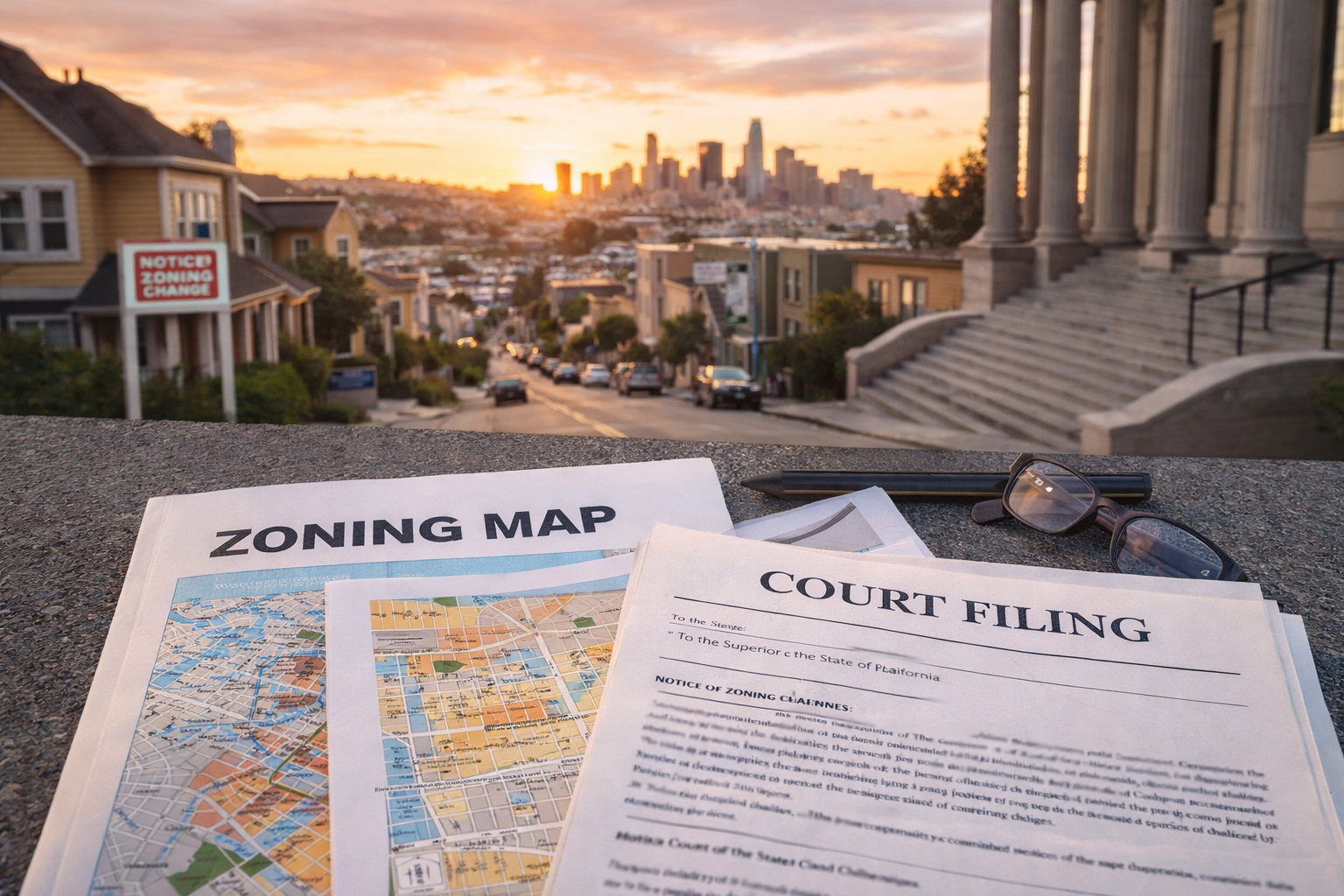
What the Family Zoning Plan is (and what it changes)
San Francisco’s Planning Department describes the Family Zoning Plan as a set of changes to the city’s restrictive zoning rules that allows new homes to be built in more neighborhoods — focused on western and northern SF, especially in and near state-designated Housing Opportunity Areas (neighborhoods with stronger access to parks, schools, and environmental conditions).
Source: SF Planning overview – https://sfplanning.org/sf-family-zoning-plan
Two details matter most for understanding neighborhood impact:
1) It’s designed around corridors, nodes, and big sites.
SF Planning’s own page shows a map and states the city prioritized corridors, nodes, and large sites for additional housing capacity.
Source: SF Planning maps & explanation – https://sfplanning.org/sf-family-zoning-plan
2) It increases what’s “buildable” (height + homes) in a lot of places.
A city memo to the Board of Supervisors calls the rezoning an “unprecedented scale,” saying it touches about 60% of parcels (roughly 92,800 out of ~154,500), and notes that form-based density (often described as “density decontrol,” meaning fewer traditional unit caps) plus additional height are key components.
Source: SF Planning Housing Element rezoning memo – https://sfplanning.org/resource/housing-element-rezoning-program
Why it’s in court right now
A lawsuit filed January 9, 2026 argues San Francisco violated CEQA (California’s environmental review law) by approving the rezoning without properly analyzing environmental impacts.
Source: Courthouse News Service – https://www.courthousenews.com/lawsuit-challenges-san-franciscos-family-zoning-plan/
The same report says plaintiffs claim the upzoning would displace low-income residents in rent-controlled buildings, harm historic buildings, and generate air pollution above significance thresholds - and they’re asking a judge to vacate the plan and yank permits approved under it.
Source: Courthouse News Service – https://www.courthousenews.com/lawsuit-challenges-san-franciscos-family-zoning-plan/
The City Attorney’s office said the plan followed years of study and outreach and that the city took deliberate steps to comply with CEQA, adding that the state housing department reviewed it for compliance.
Source: Courthouse News Service – https://www.courthousenews.com/lawsuit-challenges-san-franciscos-family-zoning-plan/
Separately, SF Planning says adopting the plan in December 2025 met the city’s state-law obligation to approve compliant rezoning by January 31, 2026.
Source: SF Planning Housing Element timeline – https://sfplanning.org/housing-element
Where the zoning changes could lead to new development: think “main streets,” not “entire neighborhoods”
The clean way to understand this: most blocks won’t suddenly transform. The plan concentrates change where SF already has the bones for it — commercial corridors and transit spines.
Here are the “watch zones” that matter most for neighborhood life:
- Richmond District corridors: Geary is repeatedly cited as a key corridor in explainers of where height and intensity increase.
Source: KQED – https://www.kqed.org/news/12065204/everything-you-need-to-know-about-san-franciscos-family-zoning-plan - Sunset District transit corridors: Judah and Taraval are specifically named in corridor-focused explanations of where changes concentrate.
Source: KQED – https://www.kqed.org/news/12065204/everything-you-need-to-know-about-san-franciscos-family-zoning-plan - Big city spines: Van Ness and Market are called out for major changes, including taller buildings in select stretches.
Source: KQED – https://www.kqed.org/news/12065204/everything-you-need-to-know-about-san-franciscos-family-zoning-plan - Corner lots and larger parcels: A Planning Local Program Heights map notes that lots ? 8,000 sq ft get a minimum height of 65 feet through the Local Program — the kind of rule that can quietly shift redevelopment pressure at specific intersections and larger-property pockets.
Source: SF Planning Local Program Heights – https://sfplanning.org/resource/local-program-heights-map
And it’s worth remembering why SF targeted the west and north in the first place: SF Planning says only 10% of new housing over the past 15 years was built in western/northern SF even though those areas cover over 50% of the city’s land area.
Source: SF Planning Housing Element analysis – https://sfplanning.org/housing-element
How to make this useful on Houseberry
If you’re using Houseberry to explore SF neighborhoods, don’t ask “Will this neighborhood change?” Ask these three questions instead:
1) What’s the neighborhood’s “front door”?
Find the main commercial street(s) and transit corridor. If the neighborhood’s daily life runs through a big corridor, it’s more likely you’ll see change there first.
Source: SF Planning corridor framework – https://sfplanning.org/sf-family-zoning-plan
2) Where are the hubs (“nodes”)?
Neighborhood centers — the busy intersection, the mini-downtown strip, the transit transfer point — are exactly what SF Planning says it prioritized.
Source: SF Planning maps – https://sfplanning.org/sf-family-zoning-plan
3) Are there big parcels or corner-heavy pockets near the corridor?
Those are the places where zoning tweaks can matter most (and where you might later see more “missing middle” projects rather than giant towers).
Source: SF Planning Local Program Heights – https://sfplanning.org/resource/local-program-heights-map