The Marina Safeway Toxics Fight Has a Second Clock
Opponents of the 848-unit Marina Safeway project have moved from zoning to soil contamination. It almost certainly will not stop the October approval. Here is the clock it can actually reach.

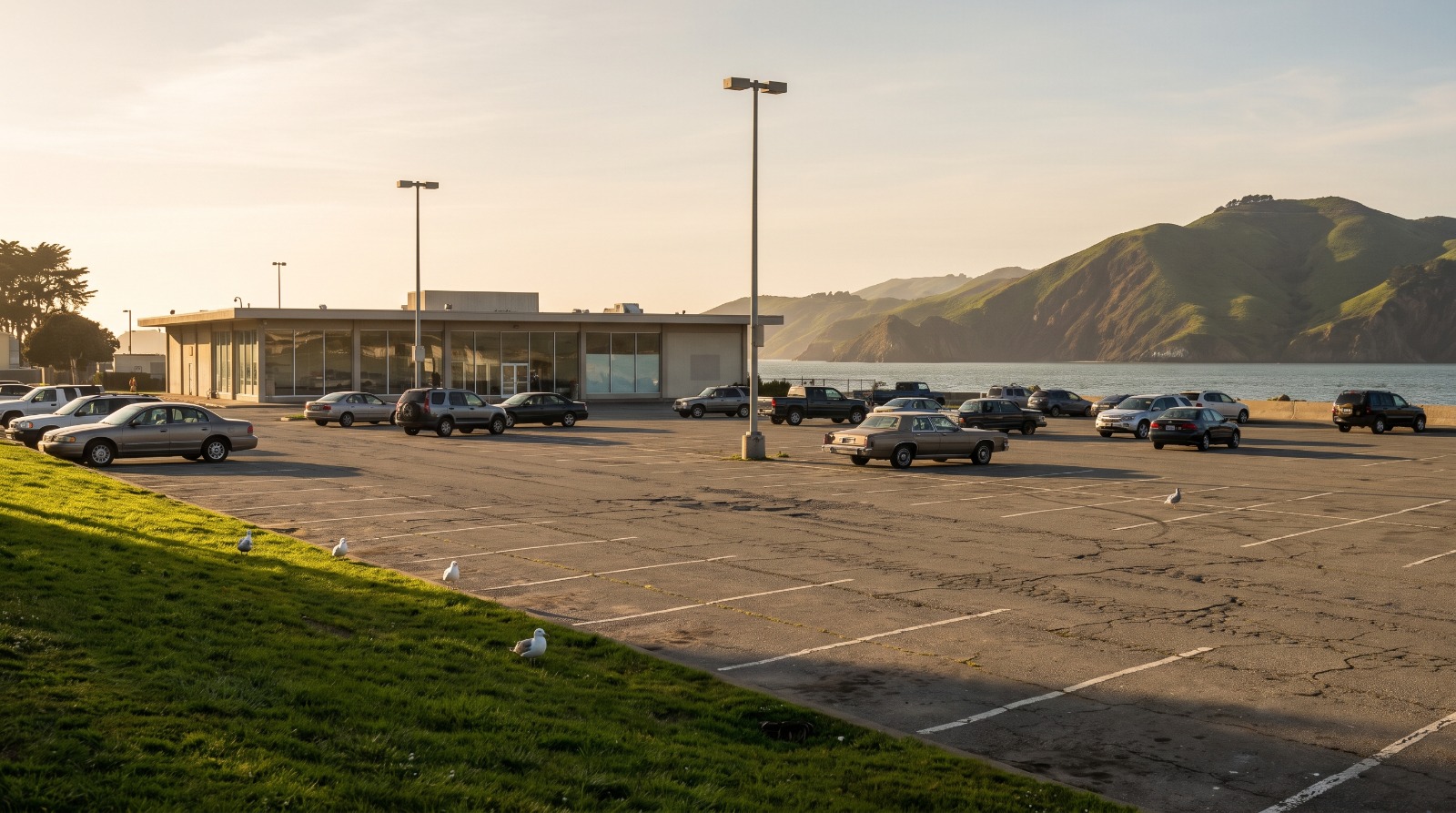
The Marina Safeway store and its parking lot at 15 Marina Boulevard in San Francisco, the site of the 848-unit housing project now facing a soil contamination fight Photo: Houseberry
A California toxics regulator put a number on the Marina Safeway site last week, and it is the first number in this fight that is not about zoning. Karina Navarro, who runs a site mitigation unit at the Department of Toxic Substances Control, told 48 Hills that sampling near 15 Marina Boulevard came back at roughly twice the commercial screening level and ten times the residential one.
Here is the part almost nobody has written down. That finding will very likely not stop the project from being approved this fall. Under AB 2011 there is no hearing to lose and no vote to flip, and San Francisco planners already cleared the last procedural hurdle in mid-August. What contamination reaches is a different clock entirely, the one that runs from approval to a legal building permit to somebody actually getting keys. Approval and occupancy are two separate schedules, and only one of them is protected by state law.
We wrote in July that this site had become a test of AB 2011. It still is. The test just moved buildings.
No commission will vote on any of that. AB 2011 is ministerial, which means staff checks the project against a list and approves it if it fits. That design is the whole point of the law, and it is also why the opposition stopped arguing about height in June and started arguing about dirt.
There was a gas works here, and that part is not in dispute
The Marina is famously built on fill from the 1912 to 1915 shoreline project, but the specific problem at 15 Marina Boulevard is industrial, not geological. San Francisco Gas Light Company ran a manufactured gas plant at Gas House Cove, across roughly three blocks from Webster to Laguna, with a two-million-cubic-foot gasometer that the 1906 earthquake destroyed. PG&E later ran a steam plant on the parcel into the 1940s and dismantled it in the 1950s. Safeway arrived in 1959 and paved it.
Manufactured gas plants are a known category of contaminated site. They leave polycyclic aromatic hydrocarbons, and often metals and cyanide. The opponents' May letter says a February 2026 report by the developer's own consultant, Langan, found chloroform and tetrachloroethene in soil vapor above the regional board's commercial screening levels, plus petroleum hydrocarbons in 6 of 32 soil samples.
None of that is exotic for this stretch of waterfront. Two miles east, the Port of San Francisco is midway through cleaning up PG&E's Beach Street gas plant, a job that got its order in 2022 and runs through 2029. At Potrero Power Station, a residential redevelopment is going up on a former gas plant under a risk management plan, after an investigation phase that ran from 1998 to 2019. Contaminated ground on this bay is normal. It is also slow.
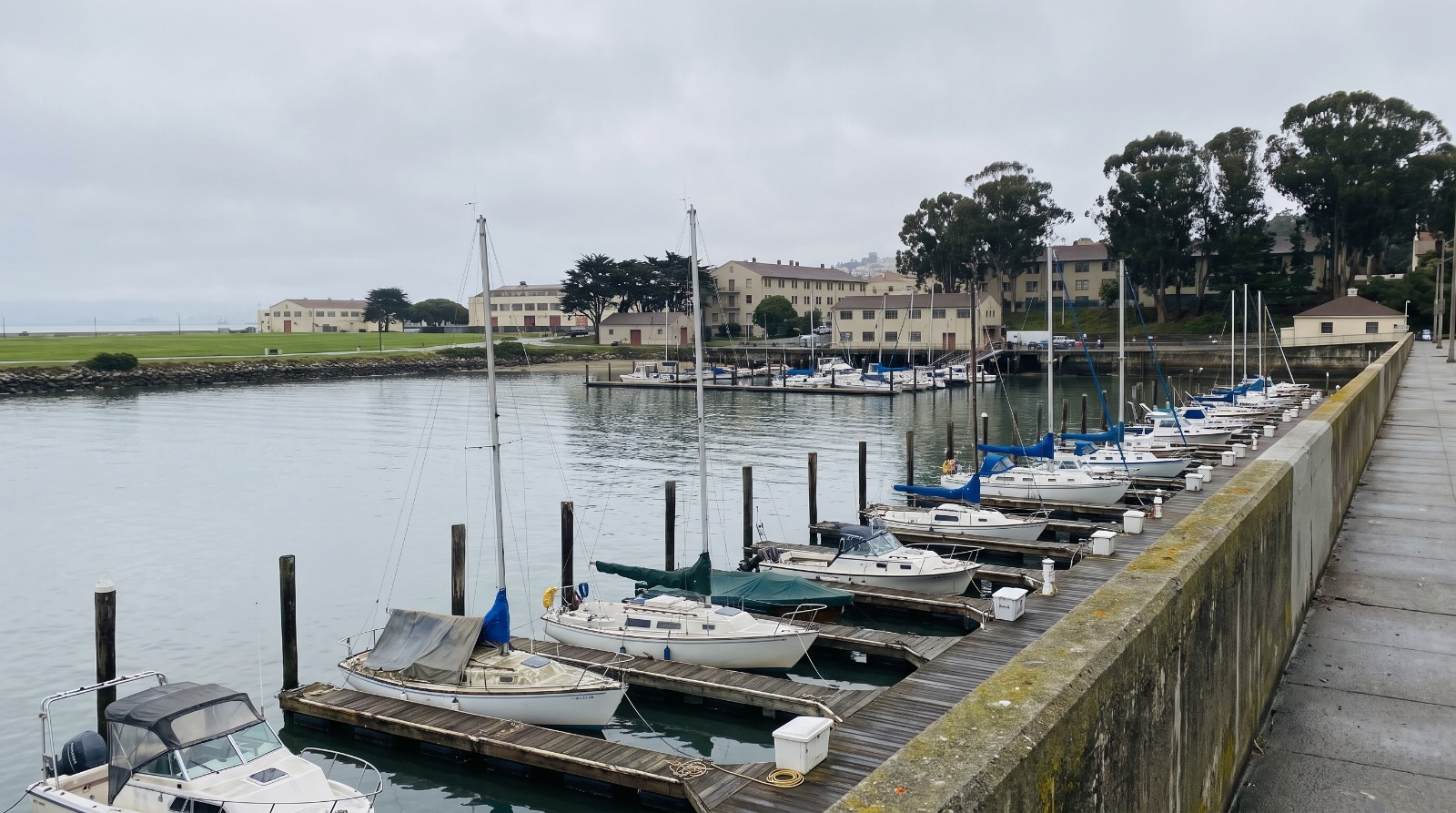
The Marina Safeway fight is now one word in one clause
AB 2011 borrows its site-exclusion list from SB 35. The relevant clause, Government Code section 65913.4(a)(6)(E), knocks a site out of streamlining if it appears on the state's hazardous waste list under section 65962.5, commonly called the Cortese List. It then offers two ways back in, and both of them turn on the same word: a regulator has to have determined the site suitable for residential use.
That is the entire dispute. Per the opponents' letter, the Regional Water Quality Control Board closed this site in November 2024 with a determination limited to commercial and industrial use, and reserved the right to revisit it if the land use changed. A commercial closure does not satisfy a residential test. The city's answer is that the question never arises, because in its reading the site is not Cortese-listed in the first place.
Both things cannot be true, and the answer is a matter of record rather than opinion. Worth knowing if you go looking: section 65962.5 is not one list. It is four, kept by different agencies, and a water board cleanup case does not live in the same subdivision as a DTSC corrective action case. Reporting so far has described the city checking DTSC's list. Whether all four were checked is a question somebody should put in writing to the planning department, because it is the difference between a project that is streamlined and one that owes a full environmental impact report.
The ordinance that survives AB 2011 entirely
Even if the city is right on every point, there is a second permit path that state streamlining does not touch, and it is San Francisco's own. Article 22A of the Health Code, better known as the Maher Ordinance, applies to any project disturbing 50 or more cubic yards of soil in areas including former bay, marsh, and creek lands. A 989,500-square-foot project with a 141,960-square-foot underground garage on 1915 bay fill is not a close call.
Maher runs through the Department of Public Health and it has real steps: a site history report, a subsurface investigation work plan, the investigation itself, a site mitigation plan, a health and safety plan, a dust control plan, then a recorded deed restriction if anything significant stays in the ground, then a completion report before a temporary certificate of occupancy issues. The city publishes no deadlines for any of it. Its own guidance simply advises applicants to start early to avoid delays.
Planning's own Director's Bulletin No. 9 adds the same shape from the other direction. A Phase I environmental assessment is a condition of approval, and if it turns up a recognized environmental condition the applicant must prepare a preliminary endangerment assessment and clean up to insignificance before occupancy. Read that carefully. It is a condition on the approval, not a bar to it.
One more wrinkle that has gone unreported. The health department's voluntary cleanup oversight program is not currently accepting new applications, and the city directs applicants to DTSC or the regional water board instead. Those are state queues, on state timelines, with no obligation to move at the speed of a housing entitlement.
Two clocks, and only one of them is on a deadline
This is the table we wish somebody had published in June. It is the same project the whole way down, but the timing of each step is governed by a different rule, and contamination reaches only the bottom half.
| Step | What sets the timing | Can the toxics claim delay it? |
|---|---|---|
| AB 2011 eligibility | Planning staff determination, made March and reaffirmed August 2026 | Only by winning the Cortese argument outright |
| Entitlement or approval | State deadline, roughly October 12, 2026 | No. There is no hearing and no vote |
| Building and grading permit | Maher Ordinance review by the health department, no published deadline | Yes, and this is the real lever |
| Construction start | Follows the permit and the site mitigation plan | Yes, indirectly |
| Certificate of occupancy | Site mitigation completion report, plus any deed restriction | Yes, explicitly |
So the honest answer to the question everybody is asking is a split decision. Will contamination stop the Marina Safeway project from being approved in October? Almost certainly not. Can it push back the day the first tenant moves in, by a year or by several? Yes, easily, and nobody can tell you by how much, because the process that decides it has no clock on it at all.
Why the city is unlikely to blink
There is a number that explains San Francisco's posture better than any quote from a planner. In February 2024 a judge found Berkeley had violated the Housing Accountability Act by wrongly rejecting a 260-unit SB 35 project at 1900 Fourth Street, on an eligibility theory rather than a merits one. The bill came to $2.6 million in penalties and $1.4 million in fees, after six years of litigation.
That case is the closest structural analog to what Marina opponents are attempting. It is also a $4 million argument for a city attorney to advise the planning department not to reverse an eligibility finding it has already made twice. Align's lawyers have reportedly reminded the city of exactly that exposure.
The fair counterpoint, and it deserves saying plainly: the neighbors are not wrong that a residential suitability determination has not been made on this parcel, and they are not wrong that nobody sampled under the store. A data gap is a data gap. Being procedurally out of runway does not make the underlying question silly.
What this means if you are shopping the Marina
Practically, less than the headlines suggest, and not in the direction people assume.
The Marina's median sale price was about $5.09 million in July 2026, against a San Francisco citywide median of about $2.16 million the same month, per our neighborhood data. Treat that number with the caution any small sample deserves. The neighborhood's monthly median has swung between roughly $3.99 million and $5.97 million over the past year, which is a fact about how few homes trade there, not about a market moving that fast. The scores are the steadier signal: 4.1 for safety and 4.2 for amenities, both above the citywide picture.
Nothing in a soil vapor report changes the ground your own house sits on. What it does change is the timeline of the block. If you are buying within a few streets of the site, the realistic scenario is not a tower going up next year. It is a parking lot that stays a parking lot for a while, then a construction site with soil handling protocols and truck traffic, then eventually 848 apartments and a replacement grocery. That is a long adjacency to price in, and it is the opposite of the fast-moving threat the opposition mailers describe.
The version of this that would genuinely matter to a buyer is the one nobody is arguing about. If the regional board's closure really is limited to commercial use, then the ground under a busy neighborhood grocery store has never been evaluated for people living on it. That is worth knowing whether or not a single apartment ever gets built, and it is the kind of question we think belongs in neighborhood research long before it belongs in a lawsuit.
The date to actually watch
Circle mid-October. If the approval issues near the twelfth, the entitlement fight is effectively over and the record moves to two places most people never look: the health department's Maher file and whichever state agency ends up writing a residential suitability determination for this parcel. That paperwork, not the next town hall at Fort Mason, is where the Marina Safeway is actually decided from here.
If you want one question to ask, ask the planning department in writing which of the four Cortese components it checked. It is a yes-or-no answer, it is a public record, and as of this week nobody has published it.
Sources
48 Hills: The Marina Safeway project has a serious toxics and sewage problem
SF Planning, Director's Bulletin No. 9: Ministerial approval processes for mixed-income housing
SF.gov: Start a development project on land that may be contaminated, the Maher Ordinance process
SF Heritage: SF Gas Light building and the Marina's industrial past
Port of San Francisco: Beach Street former manufactured gas plant cleanup
Berkeleyside: Court ruling on 1900 Fourth Street
SF YIMBY: Reduced floor count, more units for the Safeway Marina redevelopment
The Houseberry Research Team is Houseberry's reporting team: Bay Area real estate analysts, data specialists and longtime local market watchers. Every day we check the public record: building permits, city council and planning agendas, county recorder filings, state housing bills, police incident data and school results. Then we tie each story to what it means for specific neighborhoods, using Houseberry's own neighborhood data on prices, appreciation, safety, schools and amenities. Questions or corrections: Contact us.
All information provided on this website including but not limited to - school ratings, safety, amenities, user opinions, and property data - is for general informational purposes only. We do not guarantee its reliability, accuracy, or completeness. Users should independently verify information and consult appropriate professionals as needed. By using this website, you agree Houseberry is not responsible for actions, decisions, or consequences arising from reliance on the information provided
houseberry.com - CA DRE# 01847391
 Bay East ©2025. CCAR ©2025. bridgeMLS ©2025. Information Deemed Reliable But Not Guaranteed. This information is being provided by the Bay East MLS, or CCAR MLS, or bridgeMLS. The listings presented here may or may not be listed by the Broker/Agent operating this website. This information is intended for the personal use of consumers and may not be used for any purpose other than to identify prospective properties consumers may be interested in purchasing. Data last updated at October 9, 2026 12:00 AM