IPO Money Is Coming for These Bay Area Neighborhoods
SpaceX, Anthropic, and OpenAI are about to push tech wealth into a short list of Bay Area neighborhoods. The lockup calendar says it lands this fall.

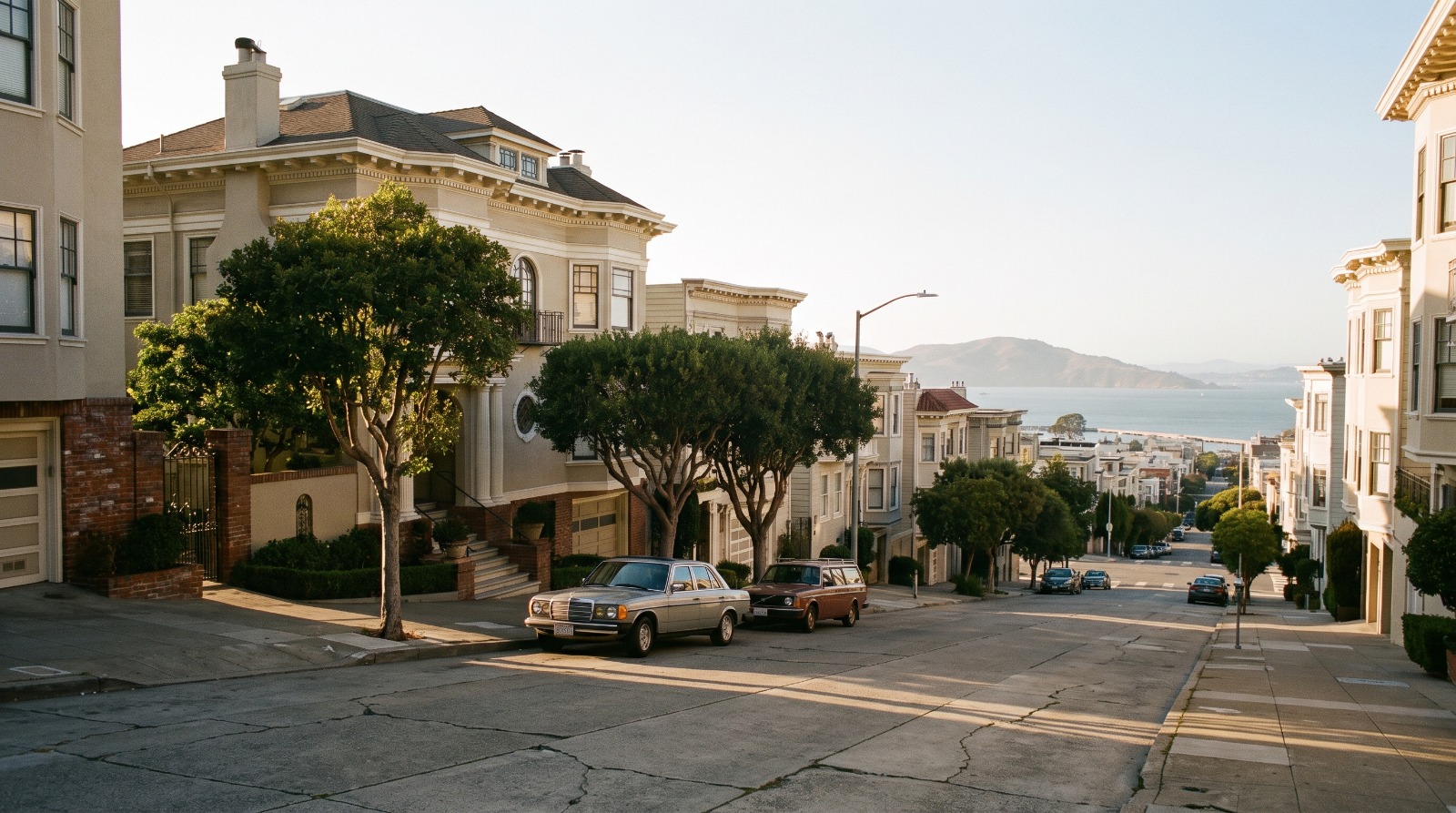
A hillside block of grand Pacific Heights homes above the San Francisco bay, one of the Bay Area neighborhoods set to absorb IPO wealth. Photo: Houseberry
SpaceX minted roughly 4,400 new millionaires on a single morning in June. Almost none of them can spend it yet.
That gap between paper wealth and spendable cash is the whole story for Bay Area buyers this year. The SpaceX IPO, plus the Anthropic and OpenAI listings lining up behind it, is about to push a wave of tech money into a housing market with no room for it. But the money arrives on a schedule, and that schedule points at this fall and winter. If you are trying to buy in the parts of San Francisco and the Peninsula where this cash tends to land, the timing matters as much as the dollar figure.
The lockup calendar, not the IPO date, is what buyers should watch
Here is what actually happened. SpaceX completed the largest IPO in history on June 12, pricing at $135 a share, raising $75 billion, and closing its first day up 19 percent at a market cap north of $2 trillion. On paper, that made a lot of employees very rich. Inman put the count at about 4,400 new millionaires overnight.
Paper is the key word. Newly public-company employees sit under a lockup, a stretch of months when they cannot sell their shares. That is why the June IPO did not move the housing market in June. The selling window is what moves it, and for SpaceX that window opens in stages. The Motley Fool lays out the schedule: a first slice of shares frees up after the company reports second-quarter earnings in late July, followed by tranches every few weeks through the fall, with the bulk of the 180-day shares releasing December 8. In plain terms, the cash starts becoming real in August and keeps building into winter.
Then there is the next wave. Anthropic filed confidentially for an IPO on June 1, with bankers circling an October listing, while OpenAI now looks likely to wait until 2027. Stack those up and you get a rolling series of liquidity events, each with its own lockup clock, feeding demand well into next year.
Why the money does not spread evenly
New wealth does not fall on a metro like rain. It pools. The people cashing out of these companies tend to chase the same short list of neighborhoods, the ones with the schools, the walkable commercial streets, and the addresses that read as having arrived. In San Francisco that means Pacific Heights, the Marina, Noe Valley, and the blocks around them. On the Peninsula it means Palo Alto, Atherton, Los Altos, and Menlo Park.
That concentration runs straight into a supply problem. San Francisco's unsold inventory sits at about 1.2 months and the broader Bay Area at 2.2, against the four to six months that counts as balanced. California inventory actually fell year over year this spring. So the new demand is not landing in a market with slack. It is landing on some of the tightest inventory in the country.
The way we look at it when we compare neighborhoods, that combination, a narrow list of target areas plus almost no supply, is exactly the setup that turns a normal market into a bidding war in a handful of zip codes while the rest of the region barely moves.
What Houseberry's own numbers say about the landing zones
Here is the part the national coverage misses. The luxury tier everyone expects this money to hit has actually been softening over the past year, not climbing. Pull the current medians from our neighborhood data and the picture is not a straight line up.
| Area | Houseberry overall score | Current median (Houseberry) |
|---|---|---|
| Old Palo Alto | 4.6 / 5 | $5.89M (May 2026) |
| Pacific Heights, SF | 4.0 / 5 | $4.53M (June 2026) |
| Palo Alto (citywide) | 4.2 / 5 | $3.9M (June 2026) |
| Noe Valley, SF | 3.4 / 5 | $2.53M (June 2026) |
| San Francisco (citywide) | 3.5 / 5 | $1.37M (May 2026) |
Look at the trend behind those numbers. Pacific Heights carried a median around $7.67M last July and sits near $4.53M now. Old Palo Alto, the enclave that once housed Steve Jobs and Larry Page, has drifted from about $7.12M to $5.89M over the same year. These are thin, volatile markets where a few sales swing the median, so do not read too much into any single month. But the direction matters. The neighborhoods most exposed to the IPO wave went into this fall with luxury prices that had already cooled off their peak.
That is the setup worth understanding. When a market that thin meets a buyer pool that is suddenly liquid, cash-heavy, and racing to close, the softness can reverse fast. One Palo Alto builder told Inman a home sold two weeks before construction even finished, with the crew still on the roof. Buyers are lining up wealth-management accounts before the IPOs even price.
The buyers who cannot pay cash yet still shape the market
Not everyone is buying outright. A lot of this cohort is asset-rich and cash-poor by design. Rather than sell stock and trigger a tax bill, many borrow against it, a pattern the Inman piece describes at length. Others are stuck behind lockups and are pre-leasing or lining up new construction that will not be done until they are liquid.
For a Bay Area buyer without an IPO behind them, that has two practical effects. First, some of the competition is delayed but real, which means the pressure builds over months rather than hitting all at once. Second, new construction and recently finished homes are getting picked off early, which thins the move-in-ready supply that ordinary buyers also want.
What this does and does not mean for your search
It does not mean every Bay Area neighborhood is about to reprice. Most of the region will feel little of this. The East Bay, the outer avenues, and most of the Peninsula's more modest blocks are not where cashed-out AI employees are pointing.
It does mean that if you are shopping the specific areas this money targets, treat the fall and winter as a tightening window, not a buying dip. And it means the neighborhood-level homework matters more than ever. A citywide "San Francisco is up 22 percent" headline tells you almost nothing about whether Noe Valley and Pacific Heights are moving the same way, because they are not. Looking past the listing photos at schools, safety, price history, and how a specific block actually trades is the whole reason we built Houseberry, and it is the difference between reacting to a headline and understanding your own micro-market.
If you want the fuller picture on the two markets most in play, our neighborhood breakdowns for San Francisco and Palo Alto lay out the scores and current prices block by block.
Bay Area IPO wealth FAQs
When will IPO money actually hit Bay Area home prices?
The wealth exists now on paper, but lockups delay most spending. SpaceX shares start freeing up after late-July earnings and build through December, and Anthropic's expected October listing adds another wave. Expect the strongest demand this fall and winter rather than this summer.
Which Bay Area neighborhoods are most affected?
The money concentrates in a short list: Pacific Heights, the Marina, and Noe Valley in San Francisco, and Palo Alto, Atherton, Los Altos, and Menlo Park on the Peninsula. Most of the rest of the region sees little direct effect.
Should I rush to buy before the IPO money lands?
That is a personal call, not financial advice, but the timing cuts against waiting in the specific target neighborhoods, where supply is under two months and demand is building. In areas outside those landing zones, the IPO wave is a much smaller factor.
Are these luxury neighborhoods overpriced right now?
Houseberry's data shows several of them, including Pacific Heights and Old Palo Alto, went into the fall with medians well below last year's peak. Thin luxury markets swing hard on a few sales, so treat any single month cautiously.
Sources
Inman: Inside the IPO wealth wave hitting New York and Bay Area real estate
NBC News: SpaceX completes the largest IPO in history
The Motley Fool: SpaceX insider lockups start expiring in July
CNBC: Anthropic confidentially files IPO prospectus
CNBC: OpenAI IPO timeline delayed
The Houseberry Research Team is Houseberry's reporting team: Bay Area real estate analysts, data specialists and longtime local market watchers. Every day we check the public record: building permits, city council and planning agendas, county recorder filings, state housing bills, police incident data and school results. Then we tie each story to what it means for specific neighborhoods, using Houseberry's own neighborhood data on prices, appreciation, safety, schools and amenities. Questions or corrections: Contact us.
All information provided on this website including but not limited to - school ratings, safety, amenities, user opinions, and property data - is for general informational purposes only. We do not guarantee its reliability, accuracy, or completeness. Users should independently verify information and consult appropriate professionals as needed. By using this website, you agree Houseberry is not responsible for actions, decisions, or consequences arising from reliance on the information provided
houseberry.com - CA DRE# 01847391
 Bay East ©2025. CCAR ©2025. bridgeMLS ©2025. Information Deemed Reliable But Not Guaranteed. This information is being provided by the Bay East MLS, or CCAR MLS, or bridgeMLS. The listings presented here may or may not be listed by the Broker/Agent operating this website. This information is intended for the personal use of consumers and may not be used for any purpose other than to identify prospective properties consumers may be interested in purchasing. Data last updated at October 11, 2026 12:00 AM