San Francisco just legalized selling meals from your own kitchen
San Francisco supervisors voted unanimously to allow home kitchen food businesses. Here are the caps, the $828 fee, how it compares with other Bay Area counties, and what renters should check first.

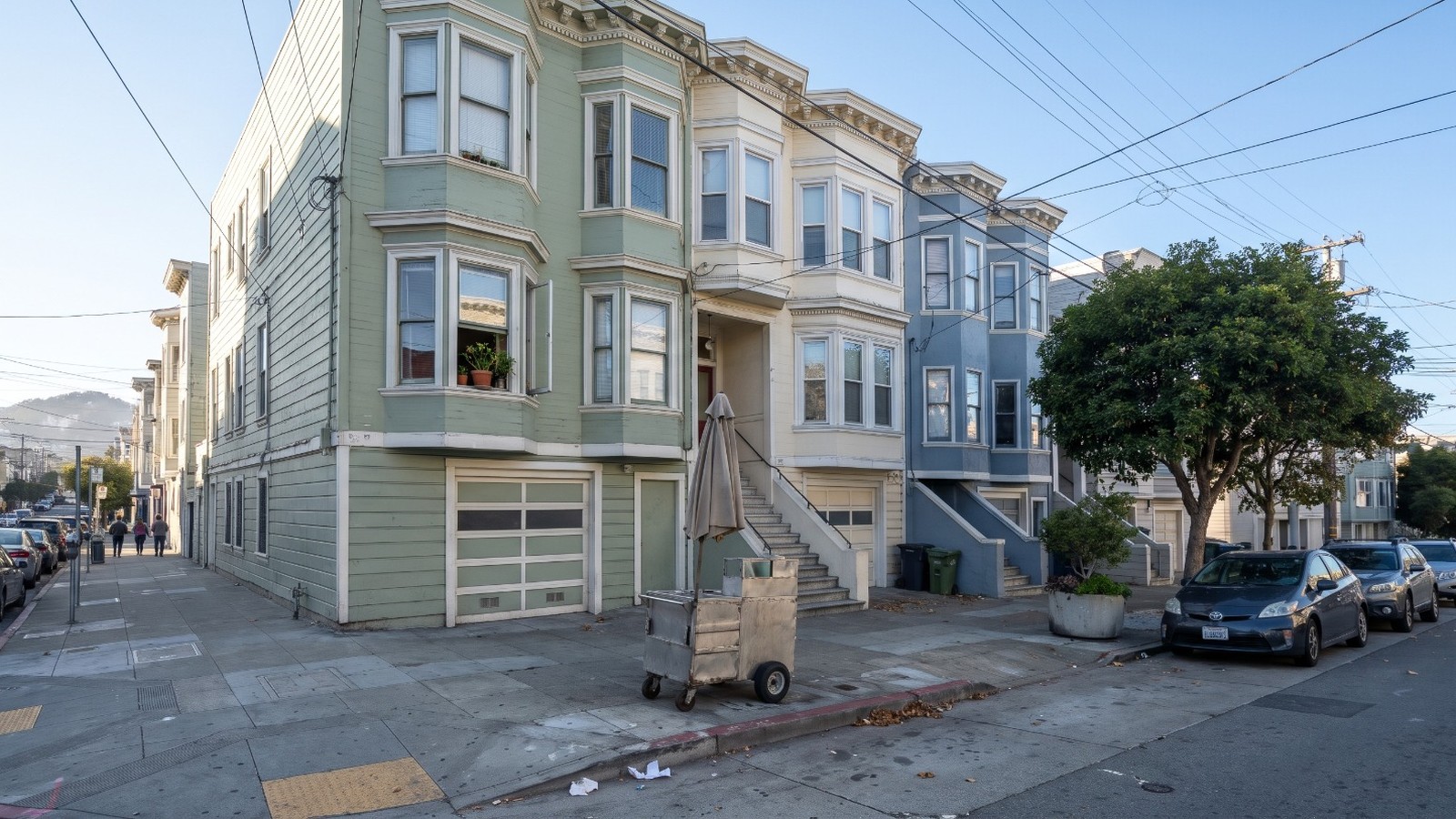
AI-generated morning view of pastel Victorian flats on a Mission District block in San Francisco with a food pushcart at the curb Photo: Houseberry
For $828 and a health inspection, a San Francisco resident will soon be able to cook dinner in their own kitchen and sell it. The Board of Supervisors legalized home restaurants on Tuesday, Nov. 10, in a unanimous vote that took under two minutes, Mission Local reported.
California has allowed these businesses since 2018, but only where a county or city opts in. San Francisco had not. In September we wrote that six of the nine Bay Area counties let you sell meals out of your own kitchen and San Francisco did not, yet. Now it does, and the city's own analysts expect the program to cost about $500,000 to set up.
The state's name for this is a microenterprise home kitchen operation, or MEHKO. In plain terms, your kitchen becomes a tiny licensed restaurant with a cap on how much it can sell. That matters most in places like the Mission, where Supervisor Jackie Fielder's district includes a street-food economy that has been paying for commercial kitchens it could not afford. Houseberry's amenities score for the Mission is 3.3 out of 5, with a typical home price of $1.19 million in September 2026.
What the rules actually allow
You cook at home and sell from home, by pickup or delivery, or you cook at home and sell from a cart. You have to describe your ingredients, show how you will store food safely and explain how you will clean your equipment.
Do the math on the cap and you get a real small business. Ninety meals a week is about 13 a day. To reach the $100,000 sales limit at that pace you would need to average about $21 a meal across 4,680 meals a year. That is a plausible plate of birria or a family tray of lumpia.
The cart tier is the bigger change. Earlier this year supervisors required street food vendors to prep in a certified commissary kitchen, which runs about $1,000 a month. Vendors said that would put them out of business. A home kitchen permit at $828 a year is less than one month of commissary rent, so a vendor paying for a commissary would save about $11,000 a year.
San Francisco is late, and the other counties show how it goes
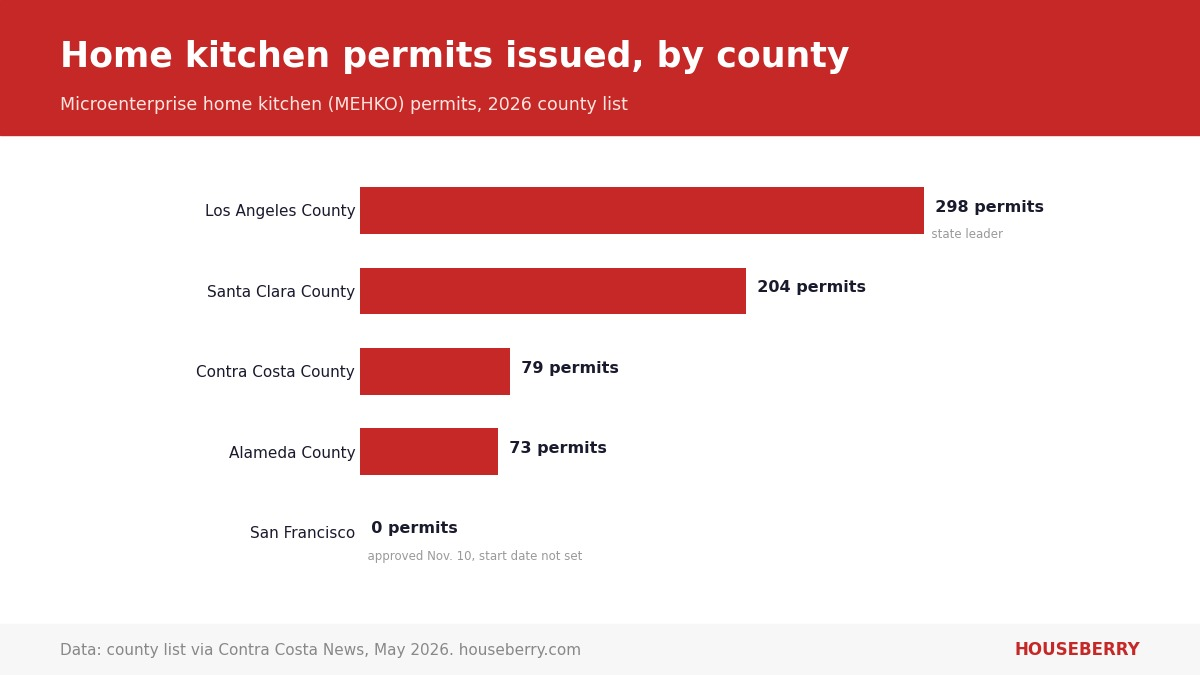
Santa Clara County has issued 204 permits, Contra Costa 79 and Alameda 73, according to a county list cited by Contra Costa News when Contra Costa made its pilot permanent in May. Los Angeles County leads the state at 298. Santa Cruz, Monterey, Sonoma and San Mateo counties and the city of Berkeley also allow them.
Those are small numbers. About 200 home kitchens in a county of nearly 2 million people will not change many blocks. Contra Costa logged two complaints about permitted home kitchens over its two-year pilot. Statewide, health agencies found two foodborne illness complaints across 898 permitted kitchens from 2019 to 2024, about 0.2 percent, according to a COOK Alliance presentation to San Francisco's Small Business Commission.
We think this is overdue and the city got it right. San Francisco spent the spring making street vendors rent commercial kitchens and then admitted, in effect, that the rent was the problem. The home kitchen permit fixes that at almost no cost to anyone else.
What it means if you own or rent
For a homeowner, nothing changes unless you apply. A 90-meal weekly cap is about 13 pickups a day, so a home kitchen on your block looks like a few extra cars around dinner time.
If you rent, read your lease before you spend $828. The Department of Public Health permit covers food safety. It does not override what your landlord or homeowners association allows.
Where the permits land will likely follow where the cooks already are. In the Excelsior, also in Fielder's district, Houseberry put the typical home at $1.22 million in September 2026, and in Bernal Heights it was $1.81 million. Houseberry scores Bernal's amenities at 3.5 out of 5. Neither price moves because of a few licensed kitchens. What changes is what is for sale on the block, and the San Francisco amenities ranking is where you can see which neighborhoods already have the most of it.
Sources
The Houseberry Research Team is Houseberry's reporting team: Bay Area real estate analysts, data specialists and longtime local market watchers. Every day we check the public record: building permits, city council and planning agendas, county recorder filings, state housing bills, police incident data and school results. Then we tie each story to what it means for specific neighborhoods, using Houseberry's own neighborhood data on prices, appreciation, safety, schools and amenities. Questions or corrections: Contact us.
Map of San Francisco Neighborhoods
Loading map...
View Full Map
Top Neighborhoods in San Francisco, CA





All information provided on this website including but not limited to - school ratings, safety, amenities, user opinions, and property data - is for general informational purposes only. We do not guarantee its reliability, accuracy, or completeness. Users should independently verify information and consult appropriate professionals as needed. By using this website, you agree Houseberry is not responsible for actions, decisions, or consequences arising from reliance on the information provided
houseberry.com - CA DRE# 01847391
 Bay East ©2025. CCAR ©2025. bridgeMLS ©2025. Information Deemed Reliable But Not Guaranteed. This information is being provided by the Bay East MLS, or CCAR MLS, or bridgeMLS. The listings presented here may or may not be listed by the Broker/Agent operating this website. This information is intended for the personal use of consumers and may not be used for any purpose other than to identify prospective properties consumers may be interested in purchasing. Data last updated at November 12, 2026 12:00 AM