Which Bay Area Housing Markets Feel Tech Layoffs First
Intel is cutting again, days before earnings. Here is which Bay Area and Sacramento-region housing markets are most exposed to the 2026 tech layoff wave, and what the data actually shows.

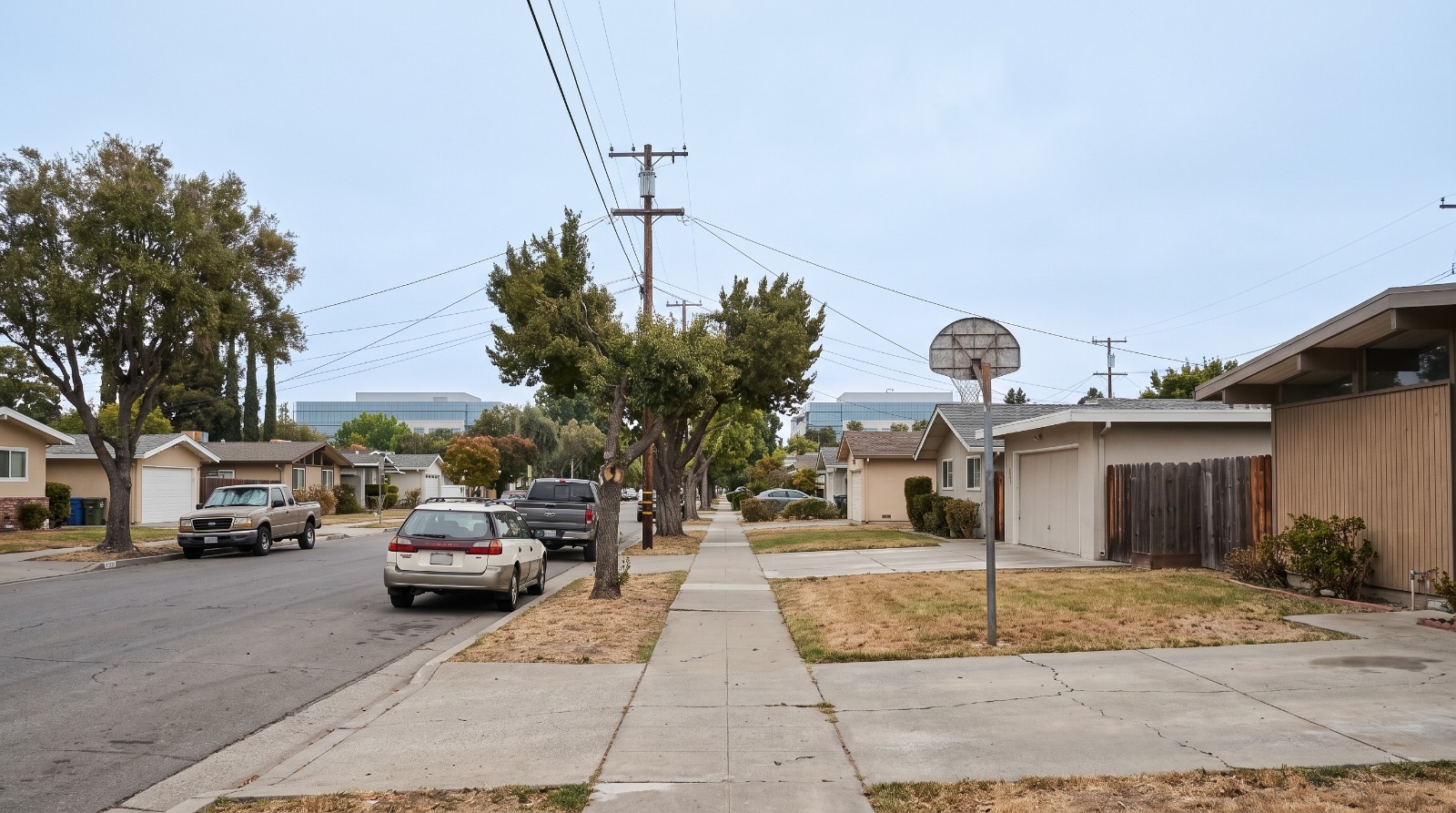
A Santa Clara residential street near Silicon Valley tech campuses, where Bay Area tech layoffs ripple into the local housing market. Photo: Houseberry
Intel is cutting jobs again, this time in its data center and AI group, and the timing is not subtle. The layoffs landed just days before the company reports earnings on Thursday, July 23. Intel has not said how many roles are going, but the cut stands out because that same unit grew revenue 22 percent year over year last quarter. When a company trims a growing division, it is managing costs, not chasing demand.
For homebuyers, the interesting question is not what happens to Intel. It is which neighborhoods absorb the shock when a big local employer keeps shrinking. Because the Bay Area does not feel tech layoffs evenly. Some markets barely flinch. Others are already showing it in the data.
The 2026 layoff wave is bigger than one company
Intel is the headline, not the whole story. The company has been shrinking for a while under CEO Lip-Bu Tan, who set a target of roughly 75,000 core employees by the end of 2025, down from about 96,400 last summer. Its global workforce has fallen by roughly 40 percent in four years.
Zoom out and 2026 has been rough across tech. Depending on which tracker you trust, somewhere between 110,000 and 168,000 tech jobs have been cut this year. Not all of those are Bay Area jobs. But enough of them are that it is worth asking where the people losing them actually live.
Which markets are most exposed
Exposure comes down to concentration. The more a town’s economy leans on one or two big employers, the more its housing market moves when those employers cut. Here is how the exposure stacks up right now, from most to least.
- Folsom, in the Sacramento region. This is the clearest case. Intel employs roughly 5,000 people on its Folsom campus, and the local market is already cooling. The June median sale price ran near 781,000 dollars, but homes took around 54 days to sell, up from 32 days a year earlier, and better than a third of listings had a price cut. That is what a softening, employer-concentrated market looks like.
- Santa Clara. Intel’s headquarters town, and part of the broader South Bay. Here the exposure shows up in prices, not in patience. Santa Clara County single-family prices were down about 8.6 percent year over year in June, even though homes still sold in around 12 days. Buyers are paying less, but the market has not gone slow. Not yet.
- The wider South Bay and Peninsula tech towns. Sunnyvale, Mountain View, San Jose. These carry real exposure too, but their employer base is more diversified, and the AI hiring boom at some firms is offsetting cuts at others. That is why the region reads as resilient even as individual companies shed staff.
The pattern is simple. Where one employer dominates, like Intel in Folsom, layoffs show up fast in days on market and price cuts. Where the job base is broad, like San Jose or Sunnyvale, the same layoffs get absorbed and the market barely blinks.
What this does and does not mean
It does not mean these towns are bad bets. Santa Clara is still a strong, fast market, and Houseberry ranks Santa Clara Southwest as the top neighborhood in the city on overall score, with schools and safety both above the local average. A price that is down 8.6 percent from last year is arguably a better entry point, not a warning.
It also does not mean a layoff headline predicts your street’s value. One company’s cost-cutting is not the same as a neighborhood losing its economic base. Intel is keeping its Folsom operations and staff even as it explores selling the campus real estate.
What it does mean is that if you are buying in a town built around one big employer, that concentration is a real input, the same way schools and commute are. It is worth knowing before you sign, not after.
What to watch next
Intel reports on Thursday, and the layoff number it has so far declined to give may finally surface. If the cut is deep, Folsom and Santa Clara are the two California markets to watch for a reaction over the next couple of quarters. If you are weighing them, our Santa Clara neighborhood rankings and best-value Santa Clara list are a good way to see which pockets hold up on schools, safety, and value regardless of what any single employer does next. And if you want the opposite trade, more listings and more room to negotiate, the East Bay is where the inventory is actually building.
The layoff wave is real. How it lands on your future block depends almost entirely on how many eggs that neighborhood keeps in one company’s basket.
Sources
- Intel Launches Fresh Layoffs in Data Center and AI Unit Ahead of Earnings (Benzinga)
- Intel Plans Data Center and AI Group Layoffs Despite 22% Q1 Growth (TrendForce)
- Intel to Lay Off 22% of Workforce as CEO Tan Signals No More Blank Checks (Computerworld)
- Silicon Bay Market Update, July 2026 (Ascendre)
- Folsom Market Report, June 2026 (Kristin Luxe Realty)
- Intel Plans Sale-and-Leaseback of Its Folsom Campus (Tom’s Hardware)
The Houseberry Research Team is Houseberry's reporting team: Bay Area real estate analysts, data specialists and longtime local market watchers. Every day we check the public record: building permits, city council and planning agendas, county recorder filings, state housing bills, police incident data and school results. Then we tie each story to what it means for specific neighborhoods, using Houseberry's own neighborhood data on prices, appreciation, safety, schools and amenities. Questions or corrections: Contact us.
All information provided on this website including but not limited to - school ratings, safety, amenities, user opinions, and property data - is for general informational purposes only. We do not guarantee its reliability, accuracy, or completeness. Users should independently verify information and consult appropriate professionals as needed. By using this website, you agree Houseberry is not responsible for actions, decisions, or consequences arising from reliance on the information provided
houseberry.com - CA DRE# 01847391
 Bay East ©2025. CCAR ©2025. bridgeMLS ©2025. Information Deemed Reliable But Not Guaranteed. This information is being provided by the Bay East MLS, or CCAR MLS, or bridgeMLS. The listings presented here may or may not be listed by the Broker/Agent operating this website. This information is intended for the personal use of consumers and may not be used for any purpose other than to identify prospective properties consumers may be interested in purchasing. Data last updated at October 21, 2026 12:00 AM