Redwood City Just Raised Its ADU Cap to 8
On July 13 the Redwood City Council raised its detached ADU cap on multifamily lots from two to eight and cut parking and hearings for small projects. Here is what is genuinely new, and what was state law all along.

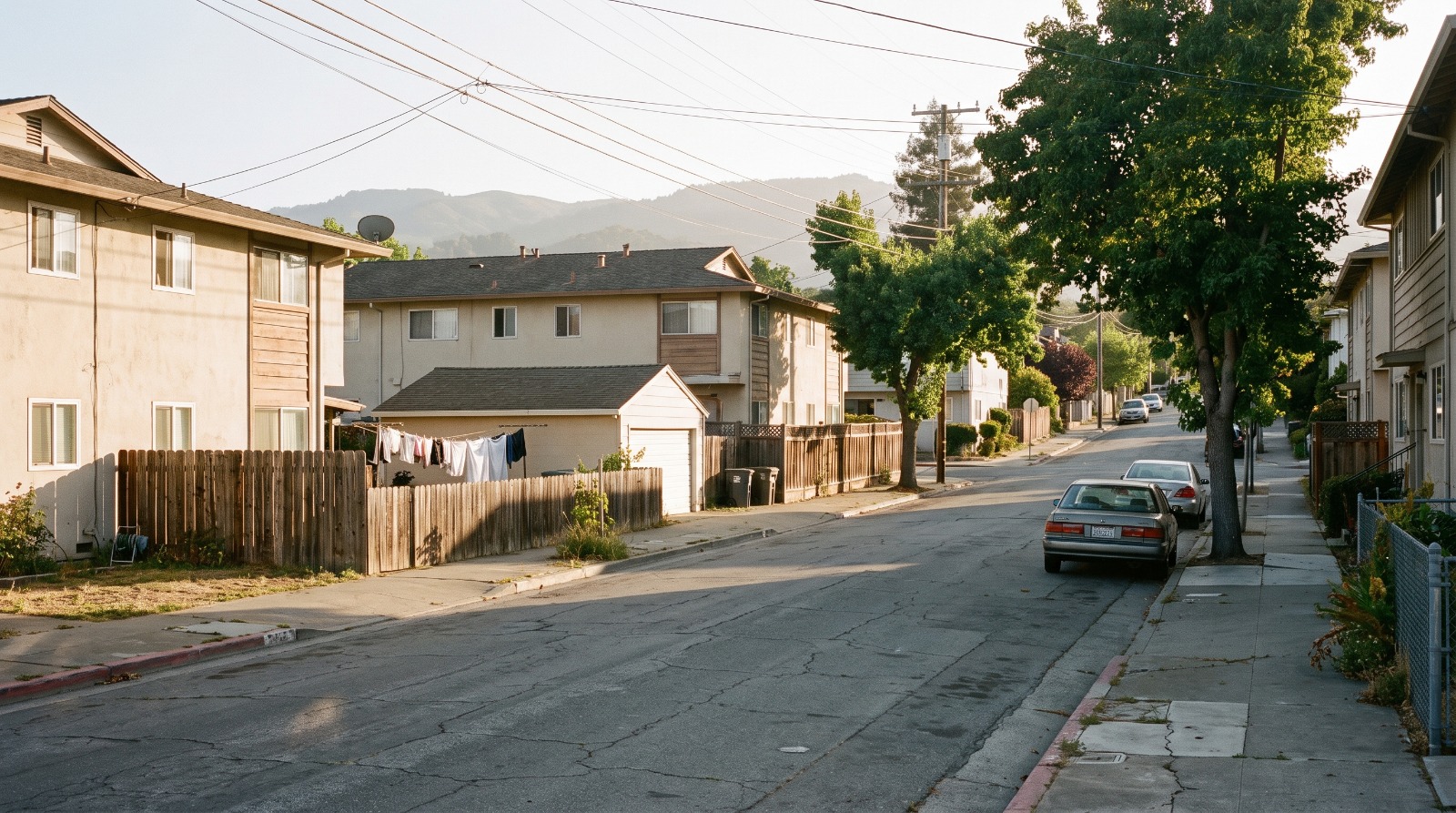
An older block of multifamily homes in Redwood City, where new rules allow up to eight backyard ADUs on a lot. Photo: Houseberry
On July 13 the Redwood City Council spent part of its evening voting 6 to 1 to rewrite more than 20 pieces of its zoning code at once. The change that traveled was the accessory dwelling unit rule. Redwood City will now allow up to eight detached ADUs on a multifamily lot, up from two. Read quickly, that sounds like the city just blew the doors off backyard housing. Read the staff report and the state code sitting behind it, and the story is more interesting, and a lot more useful if you actually own property here.
Here is the short version. The eight-ADU number is mostly Redwood City catching its own code up to a state law that has been on the books since the start of 2025. The parts that were genuinely the council's own call, cutting parking and skipping public hearings for whole categories of projects, got almost no attention and matter more.
Council member Marcella Padilla cast the lone no vote over open-space concerns, and council member Diane Howard said she had grave concerns about removing parking, the classic worry that the cars do not disappear just because the requirement did. Fair point. I will come back to it.
The eight-ADU headline is state law wearing a local costume
Here is what most of the coverage left out. California already made eight the number. SB 1211, which took effect January 1, 2025, lets you build up to eight detached ADUs on a multifamily lot statewide, capped at the number of existing units, plus interior conversions worth another quarter on top. Redwood City's own ADU page still described a two-unit cap as recently as this year. So the July 13 vote did not invent Redwood City's backyard boom. It wrote a state mandate into the local rulebook, which cities are supposed to do anyway.
Same story on parking. AB 2097 has barred cities from requiring parking within a half mile of a major transit stop since 2023, which already covers most of downtown Redwood City around the Caltrain station. The council's real, discretionary move was going past the state floor, killing parking minimums for affordable, senior, and group housing across the whole city rather than just near transit, and stripping the public hearing out of entire project types. That is the part other Peninsula cities have not all done, and it is the part worth watching.
What eight ADUs on a lot really means
Play the eight-ADU rule out and the math gets striking. Take a small existing eight-unit apartment building. State law plus this ordinance would let an owner add eight detached ADUs in the back and convert interior space for two more, all approved over the counter, with no public hearing and, for many configurations, no required parking. That is a jump from eight homes to roughly eighteen on a parcel zoned for eight. Stack that across a block of four older apartment parcels and you have a path from 32 units to more than 70, none of it triggering a single neighborhood meeting.
That is a real change in what is legally possible, and it is the kind of quiet, by-right density that never shows up as a splashy tower proposal. It is also where Diane Howard's parking worry has some teeth, because a block that doubles its unit count without adding a single space leans hard on street parking that was probably already full.
Legal does not mean built
Now the reality check, because up to eight is a ceiling almost nobody will touch. A detached ADU in Redwood City runs roughly $200,000 to $400,000 to build. The city's median home value sits around $2.14 million on our Redwood City city guide, and a new one or two-bedroom ADU rents for something like $2,800 to $3,500 a month. Do that math and a single backyard unit pencils slowly, over a long horizon, for an owner with cash or equity to spend. Eight of them on one lot is a spreadsheet fantasy for all but a handful of larger property owners.
This is the honest frame for every one of these zoning rewrites. Redwood City just widened the legal envelope. Whether homes actually appear inside it depends on construction costs, interest rates, and rents, not on the code. The city knows this. It is sitting at about 29 percent of its 4,588-unit state housing target with roughly five years left on the clock, and a lot of that gap is projects that are already entitled but have not pulled permits because they do not pencil yet. Fewer hearings, no parking, more units allowed by right, that is the city trying to turn paper approvals into actual buildings.
Why this matters if you are shopping the Peninsula
For a buyer, the practical takeaway is not that Redwood City is about to be overrun with cottages. It is that the development rights attached to a given lot just changed, and they now vary a lot by parcel type. A multifamily lot near downtown carries very different latent value than a single-family lot in the flats, and the two can look identical in a listing photo. When we compare neighborhoods, this is exactly the kind of thing that hides under the surface of a price, and it is why looking at how Redwood City neighborhoods actually stack up on schools, safety, and value beats guessing from curb appeal.
If you want the statewide backdrop on what you can legally build in a backyard, from junior ADUs to the fee breaks on small units, our explainer on California's 2026 ADU laws is the companion to this one. Redwood City is one city adopting those state rules and adding its own on top. It will not be the last. Menlo Park's code still caps multifamily ADUs at two on paper, behind the state standard, and cities up and down the Peninsula are working through the same rewrite. Watch which ones pair the ADU numbers with the quieter parking and hearing cuts. That combination, more than the headline number, is what will decide where the next wave of Peninsula infill actually lands.
The next test is procedural and boring and important. Redwood City deferred two of the proposed amendments and will take them up later this year, and the parking changes will get their first real stress test the first time a no-parking affordable project lands next to a full residential block. Watch that hearing. Or rather, watch for the project that no longer needs one.
Sources
The Houseberry Research Team is Houseberry's reporting team: Bay Area real estate analysts, data specialists and longtime local market watchers. Every day we check the public record: building permits, city council and planning agendas, county recorder filings, state housing bills, police incident data and school results. Then we tie each story to what it means for specific neighborhoods, using Houseberry's own neighborhood data on prices, appreciation, safety, schools and amenities. Questions or corrections: Contact us.
All information provided on this website including but not limited to - school ratings, safety, amenities, user opinions, and property data - is for general informational purposes only. We do not guarantee its reliability, accuracy, or completeness. Users should independently verify information and consult appropriate professionals as needed. By using this website, you agree Houseberry is not responsible for actions, decisions, or consequences arising from reliance on the information provided
houseberry.com - CA DRE# 01847391
 Bay East ©2025. CCAR ©2025. bridgeMLS ©2025. Information Deemed Reliable But Not Guaranteed. This information is being provided by the Bay East MLS, or CCAR MLS, or bridgeMLS. The listings presented here may or may not be listed by the Broker/Agent operating this website. This information is intended for the personal use of consumers and may not be used for any purpose other than to identify prospective properties consumers may be interested in purchasing. Data last updated at October 23, 2026 12:00 AM