What California's 2026 ADU Laws Let You Build
New 2026 California laws cut fees, ease junior-ADU rules, and speed coastal permits. What you can actually build in your Bay Area backyard, and what it costs and adds.

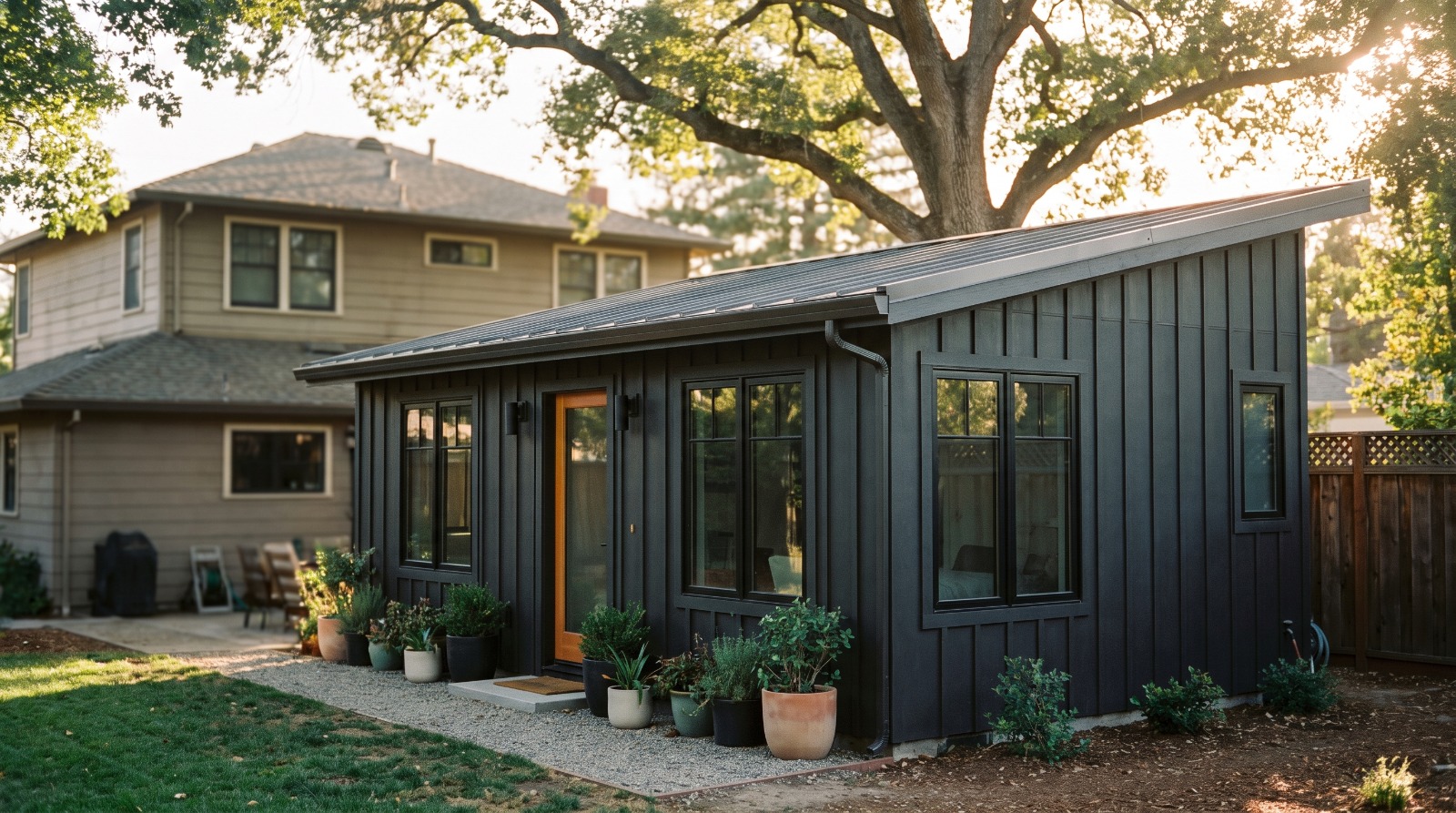
A newly built detached backyard ADU cottage behind an older Bay Area home, illustrating what California's 2026 ADU laws let homeowners build. Photo: Houseberry
California's 2026 ADU laws quietly rewired what you can build in your own backyard. If you have a Bay Area lot and have ever wondered what you could legally add to it, this is the year the answer got bigger. A batch of new state laws took effect that make accessory dwelling units, the cottages, garage conversions, and in-law suites the state calls ADUs, cheaper to permit and easier to approve. None of it is flashy. But for a homeowner weighing a unit for rental income, aging parents, or resale value, the changes are real and worth understanding before you call a contractor.
What actually changed in 2026
Three new laws carry most of the weight. Here is what each one does, in plain terms.
SB 543: smaller ADUs skip more fees
Under SB 543, which took effect January 1, ADUs and junior ADUs under 500 square feet are exempt from school impact fees, and the bill trims other development impact fees for units under 750 square feet. It also puts cities on a clock, requiring them to decide whether an application is complete within 15 business days, with the application deemed complete if the city misses the deadline. For a small backyard unit, skipped fees and a faster front end can shave real money and months off a project.
AB 1154: junior ADUs get easier to rent
AB 1154 narrows one of the more frustrating rules for junior ADUs, the small units carved out of an existing home. A city can now require the owner to live on-site only if the junior ADU shares a bathroom with the main house. Give the unit its own bathroom, and the owner-occupancy mandate goes away, which makes a junior ADU far more practical as a standalone rental.
AB 462: coastal permits stop dragging
For homeowners near the coast, from Pacifica to Half Moon Bay, AB 462 is the big one. It requires a local government or the Coastal Commission to approve or deny a coastal permit for an ADU within 60 days, with the unit deemed approved if they miss the deadline, and it removes the Coastal Commission appeal that used to stall these projects for a year or more. Because it passed as an urgency measure, it has been in effect since October 2025.
The rule everyone thinks changed but did not
One common belief is worth correcting, because getting it wrong can wreck a budget. The rule that you do not have to add parking for an ADU within half a mile of transit is not new for 2026. It has been state law for years under the existing ADU statute, along with no required replacement parking when you convert a garage. The 2026 laws did not touch it. So if a contractor or a city tells you the transit parking exemption is a fresh perk this year, it is not. It is the same baseline that also caps how small cities can force an ADU to be (they cannot hold a one-bedroom below 850 square feet) and how far back it has to sit (no more than a four-foot side and rear setback).
What an ADU costs, and what it adds back
The economics decide most projects. Bay Area build costs in 2026 run roughly like this, by unit type:
- Garage conversion or small studio, 400 to 500 square feet: about $120,000 to $150,000
- Attached one-bedroom: about $150,000 to $350,000
- Detached one or two-bedroom cottage: about $250,000 to $500,000 and up, plus permits and utility hookups
Against that, a Bay Area ADU tends to rent for roughly $2,000 to $4,200 a month depending on size and city, with one-bedrooms in places like Mountain View and Cupertino near the top of that range. On resale, the value is real but only if the unit is permitted. One national study found homes with ADUs appreciated about 22% more than comparable homes without them over a decade, and appraisers often rule-of-thumb an ADU's added value at around 100 times its monthly rent. An unpermitted unit, by contrast, usually counts for nothing in an appraisal, which is a big reason the faster, cheaper permitting in these new laws matters.
Whether it pencils depends on where you are
Like most housing math, the ADU decision is local. A $2,500-a-month unit changes the return very differently in a high-rent, high-value city than in a cheaper one, and the value an ADU adds tracks the neighborhood around it, not just the structure. That is the lens we bring at Houseberry. Before you spend $300,000 in the backyard, it helps to know how your area actually compares on price and demand, which is what the San Jose value rankings and city guides are built to show. And if you are thinking about the unit as a sellable asset rather than a rental, the state's newer condo option is its own path. We covered an early example when California's first ADU condo sold in San Jose.
Quick answers on the 2026 ADU rules
Do I still have to live on my property to rent out an ADU?
For a standard ADU, no. There is no owner-occupancy requirement. For a junior ADU, a city can require it only if the junior unit shares a bathroom with the main house, thanks to AB 1154.
Do I need to add parking for a backyard ADU?
Not if it is within half a mile of transit, in a historic district, or built as a garage conversion. That is long-standing state law, not a 2026 change.
How much does an ADU add to my home's value?
A common appraiser rule of thumb is roughly 100 times its monthly rent, and studies show homes with ADUs appreciate faster than those without. The catch is that only a permitted unit counts.
Sources
The Houseberry Research Team is Houseberry's reporting team: Bay Area real estate analysts, data specialists and longtime local market watchers. Every day we check the public record: building permits, city council and planning agendas, county recorder filings, state housing bills, police incident data and school results. Then we tie each story to what it means for specific neighborhoods, using Houseberry's own neighborhood data on prices, appreciation, safety, schools and amenities. Questions or corrections: Contact us.
All information provided on this website including but not limited to - school ratings, safety, amenities, user opinions, and property data - is for general informational purposes only. We do not guarantee its reliability, accuracy, or completeness. Users should independently verify information and consult appropriate professionals as needed. By using this website, you agree Houseberry is not responsible for actions, decisions, or consequences arising from reliance on the information provided
houseberry.com - CA DRE# 01847391
 Bay East ©2025. CCAR ©2025. bridgeMLS ©2025. Information Deemed Reliable But Not Guaranteed. This information is being provided by the Bay East MLS, or CCAR MLS, or bridgeMLS. The listings presented here may or may not be listed by the Broker/Agent operating this website. This information is intended for the personal use of consumers and may not be used for any purpose other than to identify prospective properties consumers may be interested in purchasing. Data last updated at October 21, 2026 12:00 AM