Tejon Ranch's 19,333-home Centennial plan returns to LA County
Los Angeles County released the final recirculated environmental report for Centennial, Tejon Ranch's 19,333-home new town near Gorman, after courts voided the 2019 approval. Here is what is planned, what changed and what it means nearby.

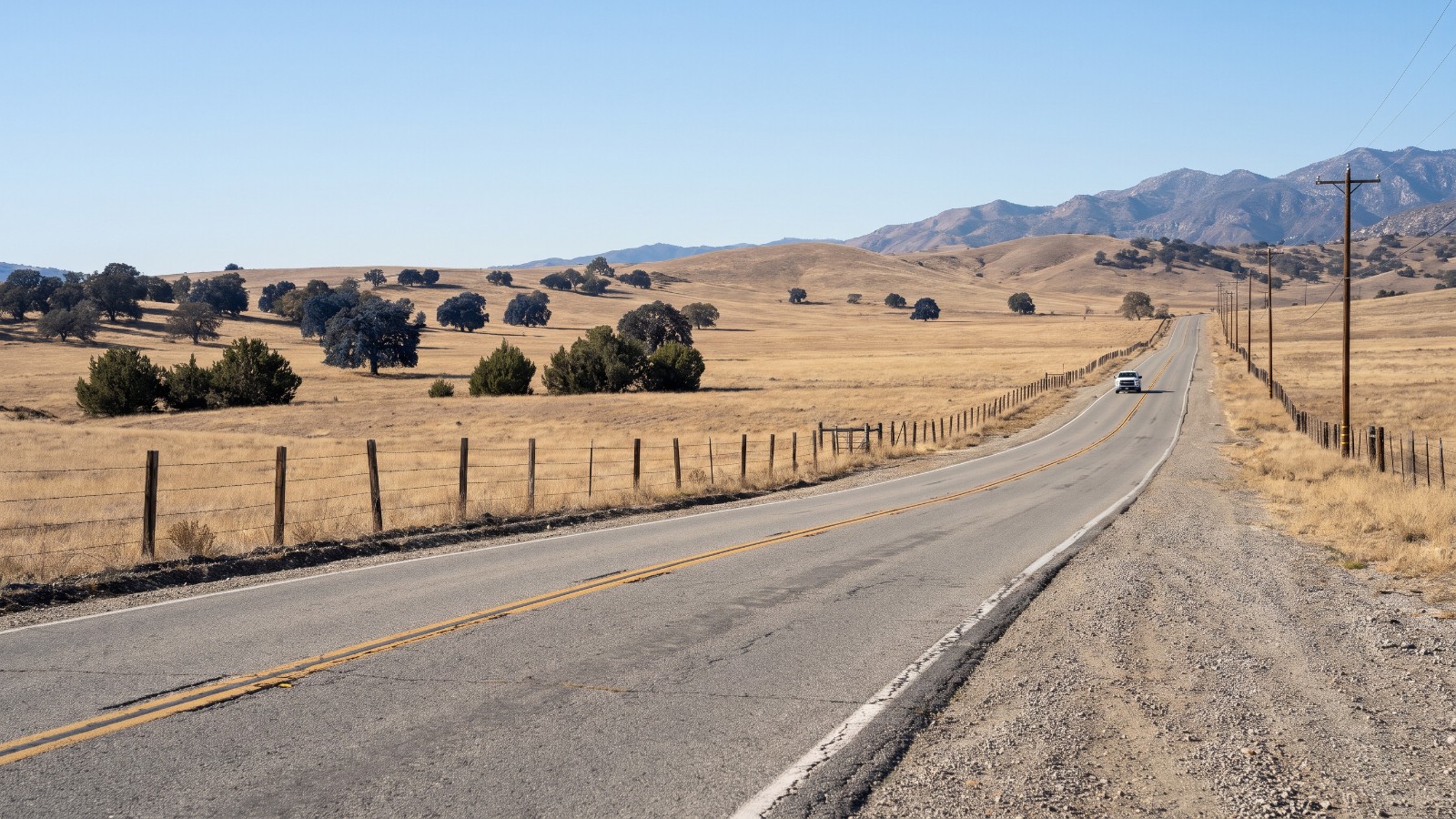
AI-generated view of open ranch grassland along Highway 138 near Gorman where Centennial at Tejon Ranch is planned Photo: Houseberry
Drive west on Highway 138 from Lancaster toward Interstate 5 and the houses run out long before the road does. What you see near Gorman is grass, oaks, cattle fence and the Tehachapi Mountains. Tejon Ranch Co. wants to put a city of about 57,000 people there.
The plan, called Centennial, is back. Los Angeles County's planning department posted a final recirculated environmental impact report on Nov. 16, the document the county needs before supervisors can approve the project a second time. It covers 12,323 acres, 19,333 homes, about 7.4 million square feet of offices, labs and light industry, seven public schools and 5,624 acres of open space.
This is the second try. The county approved Centennial in April 2019, environmental groups sued, a trial court threw the approvals out, and a state appeals court agreed in June 2025. The new report is the developer's answer to that ruling.
What is planned, in plain terms
Centennial would be a new town, not an add-on to an existing one. The county's filing lists homes, a business park, commercial centers, higher-education, medical and library space, fire and sheriff stations, a water treatment plant, two water reclamation plants, a water bank and a power substation. It would widen and improve Highway 138.
The schools are one high school, five K-8 schools and one elementary, on about 145 acres. The filing also adds a "renewable energy microgrids" land use to support a net-zero greenhouse gas program, though no specific microgrid project is proposed yet.
One change aims squarely at the court's concerns. The plan would dedicate most of a realigned Cement Road as a public road for fire resiliency, a second way out for residents in a high fire hazard area.
The 2025 appellate ruling upheld a trial court that found the county had not complied with state environmental law when it approved Centennial. The judges rejected most of the challengers' claims, but the ones that survived, including the analysis of wildfire risk, were enough to void the approvals. A settlement with a separate group, Climate Resolve, did not save the project.
The county released a recirculated partial draft in May 2026 and took public comment from June 30 to Aug. 13. The final version answers those comments. The issues the county itself flags are biological resources, greenhouse gases, wildfire and climate change.
Lancaster and Santa Clarita prices are soft
Centennial sits at the far western edge of the Antelope Valley, a long commute from the jobs in the San Fernando Valley and Los Angeles basin. That is the core argument against it: a car-dependent city on wildland at the edge of the county.
The argument for it is price. Here is what existing homes nearby cost.
| Area | Neighborhoods Houseberry scores | Typical price range, Sept. 2026 | 12-month trend |
|---|---|---|---|
| Lancaster | 5 | $396,000 to $528,000 | Mostly down slightly |
| Santa Clarita | 4 | $746,000 to $791,000 | Down 0.5 to 1.7 percent |
Both markets are flat to soft right now, according to the Lancaster rankings and the Santa Clarita rankings. Valencia, Santa Clarita's top-scoring neighborhood at 4.0 out of 5, slipped from about $800,000 to $791,000 over the year.
A town of 19,333 new homes would take decades to build out. It would not move those prices next year. Over twenty years, it would put a lot of new supply between Lancaster and the Grapevine.
We are pro-housing, and we do not think Centennial is where Los Angeles County should put it first. Nineteen thousand homes on rangeland in a fire zone, about 70 miles from downtown, is the expensive way to add supply when the county still has underused land near rail lines and job centers.
The honest counter-case is that infill in the basin keeps getting blocked, and Tejon is offering to build schools, roads, water plants and a fire exit on its own dime. If the county approves it again, the fire road and the job count are the two promises worth holding it to.
The next step is a return to the county's Regional Planning Commission and then the Board of Supervisors. Before those hearings, you can compare every Antelope Valley neighborhood Houseberry covers on the Lancaster safety ranking or look up any address on the Houseberry map.
Sources
- Centennial Specific Plan Project, Final Recirculated EIR, Los Angeles County Department of Regional Planning, Nov. 16, 2026
- Center for Biological Diversity v. County of Los Angeles, 2025 appellate ruling summary
- Recirculated partial draft EIR notice, Los Angeles County, May 2026
- Centennial at Tejon Ranch court history, SCV News
The Houseberry Research Team is Houseberry's reporting team: Bay Area real estate analysts, data specialists and longtime local market watchers. Every day we check the public record: building permits, city council and planning agendas, county recorder filings, state housing bills, police incident data and school results. Then we tie each story to what it means for specific neighborhoods, using Houseberry's own neighborhood data on prices, appreciation, safety, schools and amenities. Questions or corrections: Contact us.
Map of Lancaster Neighborhoods
Loading map...
View Full Map
Top Neighborhoods in Lancaster, CA



All information provided on this website including but not limited to - school ratings, safety, amenities, user opinions, and property data - is for general informational purposes only. We do not guarantee its reliability, accuracy, or completeness. Users should independently verify information and consult appropriate professionals as needed. By using this website, you agree Houseberry is not responsible for actions, decisions, or consequences arising from reliance on the information provided
houseberry.com - CA DRE# 01847391
 Bay East ©2025. CCAR ©2025. bridgeMLS ©2025. Information Deemed Reliable But Not Guaranteed. This information is being provided by the Bay East MLS, or CCAR MLS, or bridgeMLS. The listings presented here may or may not be listed by the Broker/Agent operating this website. This information is intended for the personal use of consumers and may not be used for any purpose other than to identify prospective properties consumers may be interested in purchasing. Data last updated at November 18, 2026 12:00 AM