Davis is the only Sacramento-area city voting on new homes
Davis Measure W would put 1,250 homes on farmland next to Wildhorse. Here is every other Sacramento-area measure that touches housing, what the school bonds cost per $100,000, and how to vote if you miss the October 19 deadline.

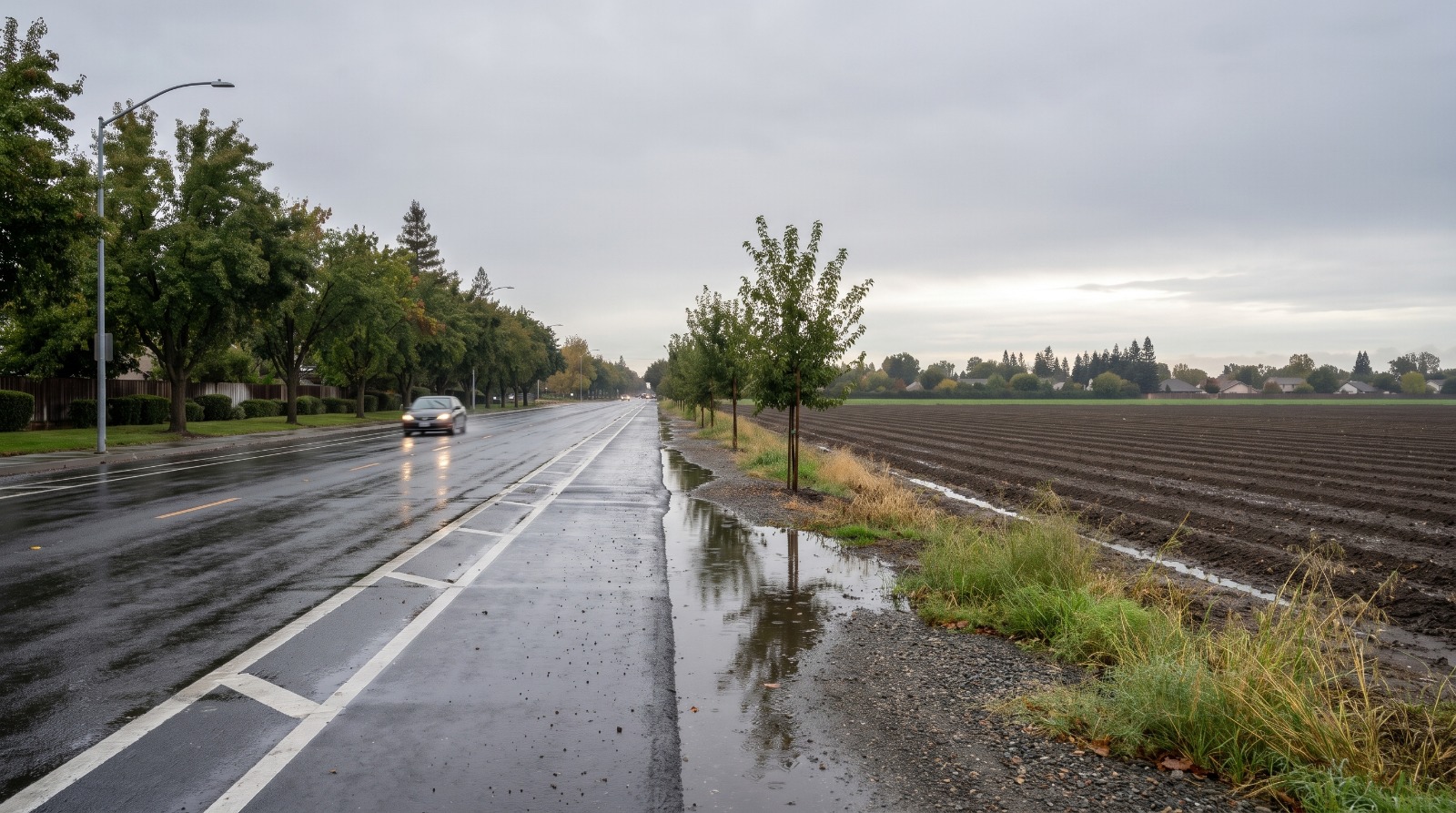
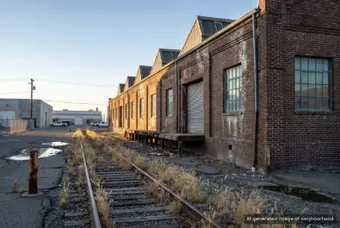
AI-rendered view of East Covell Boulevard in Davis after rain, with the Willowgrove farm field that Measure W would rezone on the right Photo: Houseberry
Monday, October 19, is the last day to register for the November 3 election and still get a ballot in the mail. For most voters around Sacramento, the local half of that ballot is school bonds, road taxes and sales taxes. By our count of the four county elections offices' lists, Sacramento, Yolo, Placer and El Dorado counties carry 33 local measures this fall. One asks voters to approve new homes.
It is Davis Measure W, and it would put 1,250 homes on about 232 acres of farmland north of East Covell Boulevard, next to Wildhorse. The market it lands in has not cooled. The typical home in the city of Sacramento was worth about $439,000 in September 2026, according to Houseberry data, up about 6 percent from October 2025.
That makes Davis the one place in the region where a ballot decides whether homes get built, and the result will show whether a neighborhood this size can still win a vote under the city's 2000 farmland law. Everything else on local ballots, from Woodland's water lines to Folsom's historic district, changes rules or tax bills instead.
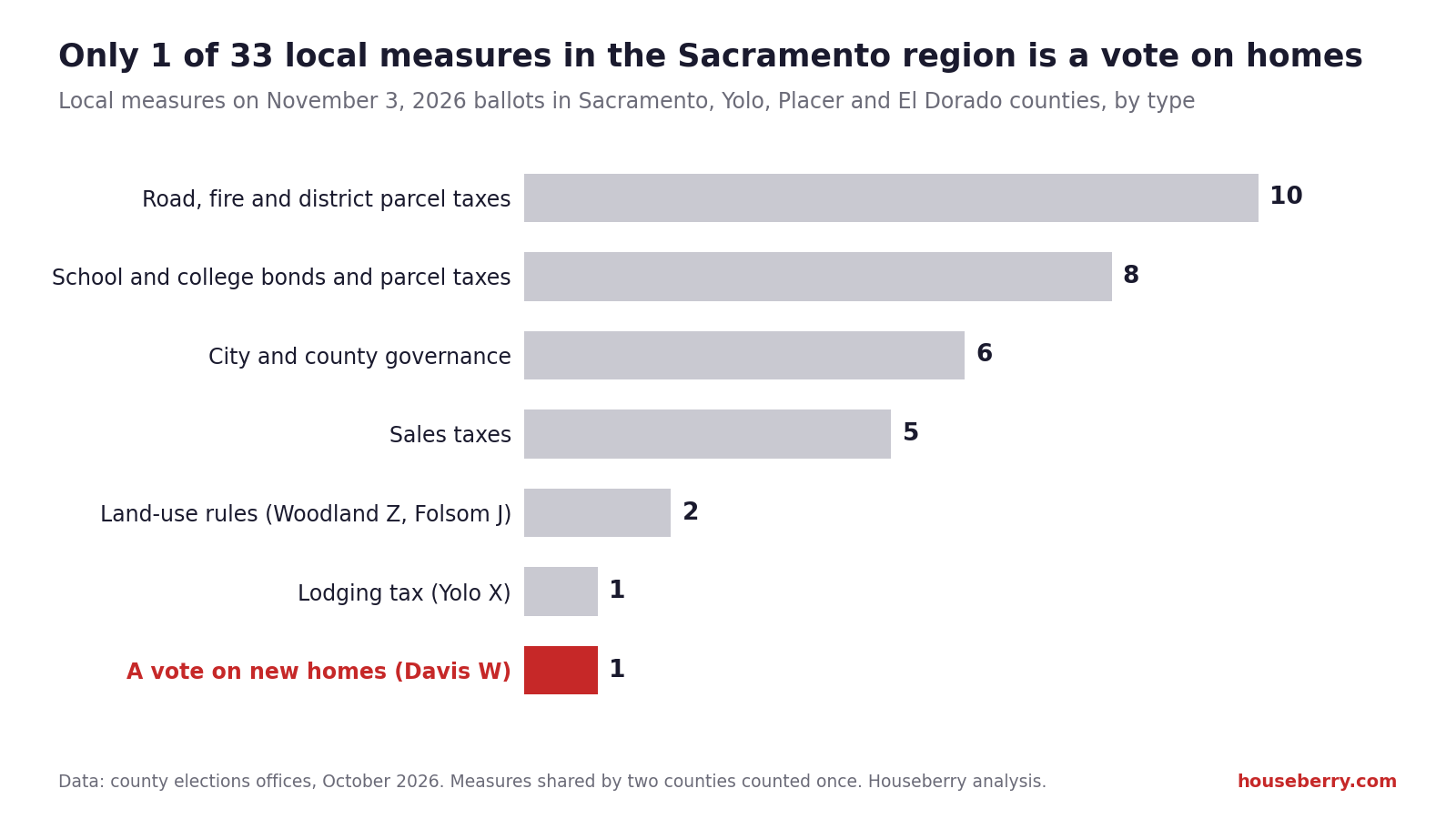
Measure W puts 1,250 homes beside Wildhorse
Willowgrove is flat farm ground east of the Wildhorse and Palomino subdivisions, with East Covell Boulevard along its southern edge and Mace Ranch across the road. It needs a citywide vote because of Measure J, the 2000 law that makes Davis voters approve any rezoning of farmland or open space for urban use. Voters renewed it as Measure R in 2010 and as Measure D in 2020, the last time by 82.75 percent, with a sunset of December 31, 2030.
A yes vote adopts Resolution 26-052 and its Baseline Project Features. Those are promises a builder cannot change without going back to voters. The City Attorney's impartial analysis lists at least 250 deed-restricted affordable homes, at least 20 of them for adults with intellectual or developmental disabilities, and a developer payment of at least $6.8 million for affordable housing. The park, with an indoor gym and three lighted fields, is budgeted at up to $20.8 million. Every home is all-electric.
The Planning Commission approved it 7-0 and the City Council 5-0. Nobody filed an argument against it by the July 24 deadline, so the voter guide prints only the yes side, signed by Mayor Donna Neville, Supervisor Lucas Frerichs and school board president Hiram Jackson among others. The developers, a group led by James Koppert, plan to build all 250 affordable units in one phase with AMG Land Development and The Pacific Companies and without city loans or grants, Abridged reported in August.
Davis said no to Village Farms by 276 votes
An empty opposition column does not make W safe. In June, Davis voters turned down Measure V, the 1,800-home Village Farms plan west of Wildhorse, 11,690 to 11,414, according to the certified count reported by the Davis Enterprise. That is 276 votes. About 1.2 percent of the ballots cast on it.
Village Farms sat near the old city landfill, in a floodplain, with vernal pools. Willowgrove's land has fewer of those problems, and some of the people who fought Village Farms are on board. Eileen Samitz of Citizens for Responsible Planning called the two "the good project and the terrible project."
The costs are real anyway. About 187 acres of farmland become a neighborhood even after the city's October 6 approval of a conservation easement on 374 acres of Bullseye Farms, which meets the 2-to-1 mitigation rule. East Covell and Mace Boulevard absorb the traffic. And the friendliest fiscal number in the campaign, a 15-year general fund gain of about $12.2 million to $12.5 million, comes from a BAE Urban Economics update commissioned by Hefner Law rather than by the city, the Davis Vanguard noted.
We think W is the strongest growth proposal Davis voters have seen since Measure J passed in 2000. It pays for its own affordable homes, it sits on the least complicated land at the city's edge, and the council backed it without a dissent. If it loses, the problem is the vote requirement, not the projects.
Every measure here that touches housing
Placer and El Dorado counties have none. Placer's list of measures runs to three city sales taxes and a $375 fire parcel tax in South Placer. El Dorado's local measures are nine road and district parcel taxes, a Tahoe school parcel tax and a countywide sales tax for hospitals and fire. The rest sit in Yolo and Sacramento counties.
| Measure | Where | What a yes vote does | Vote needed |
|---|---|---|---|
| W | Davis | Rezones about 232 acres north of East Covell Boulevard for Willowgrove, 1,250 homes | Majority |
| Z | Woodland | Lets the city run water and sewer to existing businesses within a mile of its growth line. No homes | Majority |
| J | Folsom | Lets the council give commissions, such as the Historic District Commission, binding say on projects, with appeals to the council | Majority |
| X | Unincorporated Yolo County | Raises the lodging tax, including on short-term rentals, from 8 to 12 percent | Majority |
| H | Los Rios college district | Up to $1.1 billion in college bonds, including a student housing project | 55 percent |
| F | City of Sacramento | Withdrawn. Would have sent leftover city pension money to housing | Not on ballot |
Yolo's Measure X is the one that reaches homeowners who rent out a room or a cabin. It applies only outside the four cities and takes effect January 1, 2027. On a $100 night, the tax goes from $8 to $12.
Woodland and Folsom change the rules, not the housing
Woodland's Measure Z opens a narrow gap in a 2006 promise. That year voters approved Measure A, a permanent urban limit line the city cannot extend services past. Z would let the council run water, recycled water and sewer to commercial facilities operating by November 3, 2026, on parcels within a mile of the line. It allows no homes and no new commercial buildings. The likely customers are Bayer and Clark Pacific, whose wells carry nitrates, boron and hexavalent chromium, Abridged reported after the council's unanimous vote on May 19. The companies would pay for the hookups.
Folsom's Measure J is about who gets the final word. The city charter says boards and commissions "only shall be advisory." J would let the City Council give a board or commission binding authority by ordinance, with appeals still going to the council, according to the City Attorney's analysis on the Sacramento County measures page. The analysis names the Historic District Commission as the one most likely affected, so some projects along Sutter Street could be approved without a separate council vote.
That district sits at the southern edge of the neighborhood Houseberry simply calls Folsom, the city's original grid, built block by block before the master plans arrived. It ranks 12th of 17 on our Folsom neighborhood rankings, at 3.4 out of 5 overall with a 4.1 for schools, in a city where Houseberry's overall scores run from 2.6 to 4.0.
Sacramento's housing measure never reached the ballot
The city of Sacramento had one housing-money measure lined up. Measure F would have amended the charter to wind down the Sacramento City Employees' Retirement System after its last benefits are paid and send any surplus to a housing revolving loan fund and to affordable housing. The county lists it as withdrawn. The surplus was never a sure thing. The city said in March that SCERS has been closed to new members since 1977, serves just over 700 retirees and beneficiaries, and held about $1.10 in assets for every $1.00 it owed as of July 2025.
That leaves a college bond as the region's only local measure that would pay for new housing. Los Rios Community College District's Measure H authorizes up to $1.1 billion, and the project list for Cosumnes River College and its Elk Grove center includes an affordable housing project for students, expected to be partly paid for with a state grant.
What the school bonds add to a tax bill
Six school and college bond measures in the four counties add up to about $1.96 billion. Each is repaid through property tax bills at a rate per $100,000 of assessed value. Assessed value resets to the purchase price when a home sells, so a recent buyer pays these rates on today's prices. The table applies each rate to $439,050, the typical Sacramento home value in September 2026 from Houseberry's price history, as a yardstick.
| Measure | District | Bonds | Rate per $100,000 | On $439,050 a year |
|---|---|---|---|---|
| H | Los Rios college district | $1.1 billion | Under $17 average | Under $75 |
| D | Natomas Unified | $300 million | $60 | About $263 |
| D | Rocklin Unified | $288 million | About $59 | About $259 |
| E | Center Joint Unified | $197 million | About $60 | About $263 |
| G | Galt Joint Union High | $43 million | $30 | About $132 |
| B | Winters Joint Unified | $29.9 million | About $49 | About $215 |
A buyer at that price inside both Natomas Unified and the Los Rios district would pay up to about $338 a year for the two. Natomas Unified serves neighborhoods such as Natomas Park, where Houseberry's school score is 2.9 out of 5. Sacramento City Unified's Measure M is a flat $95 per parcel for special education, with senior exemptions, and it needs two-thirds.
Four statewide propositions on every ballot
Every voter in the region also sees the four statewide housing measures from our Bay Area ballot guide, and they work the same in Rancho Cordova as in Richmond. Prop 1 authorizes $11.25 billion in bonds, $10 billion of it for affordable housing programs, and our earlier look at the housing bond shows where the money goes.
Prop 37 would let the state lend the first buyer of a newly built home up to 17 percent of the price. Prop 43 would require two-thirds approval, starting in 2027, for special taxes that voters put on the ballot by petition. Prop 45 gives agencies 365 business days to finish an environmental impact report for housing.
Who can vote on what
Can people outside Davis vote on Measure W?
No. Only City of Davis voters get W, and a simple majority passes it, while unincorporated Yolo County, El Macero included, gets Measure X instead.
What if you miss the October 19 deadline?
Register at a vote center under conditional voter registration, any day through Election Day. That ballot is provisional and counts once the county confirms your registration, LAist explains. In Sacramento County the first vote centers open October 24, with more on October 31. Mailed ballots need a November 3 postmark and must arrive within seven days.
Davis has until 8 p.m. on November 3 to decide whether the field north of East Covell stays a field. In June, the last plan for the city's edge lost by 276 votes. Before you vote on the bonds and taxes on your own ballot, see how every Sacramento neighborhood scores on safety and schools.
Sources
- Yolo County Elections, November 3, 2026 local measures
- Sacramento County Voter Registration and Elections, current measure information
- Placer County Elections, measures to appear on the ballot
- El Dorado County Elections, local measures
- Yolo County election results, Davis Measure D, 2020
- Davis Enterprise, Yolo County certifies primary election, June 2026
- Davis Vanguard, Willowgrove faces little opposition, October 11, 2026
- Abridged, Willowgrove housing development in Davis, August 3, 2026, and Woodland water lines vote, May 20, 2026
- Sacramento City Express, SCERS surplus funds, March 26, 2026
- Houseberry city, neighborhood and ranking data, October 2026
The Houseberry Research Team is Houseberry's reporting team: Bay Area real estate analysts, data specialists and longtime local market watchers. Every day we check the public record: building permits, city council and planning agendas, county recorder filings, state housing bills, police incident data and school results. Then we tie each story to what it means for specific neighborhoods, using Houseberry's own neighborhood data on prices, appreciation, safety, schools and amenities. Questions or corrections: Contact us.
Map of Sacramento Neighborhoods
Loading map...
View Full Map
Top Neighborhoods in Sacramento, CA



All information provided on this website including but not limited to - school ratings, safety, amenities, user opinions, and property data - is for general informational purposes only. We do not guarantee its reliability, accuracy, or completeness. Users should independently verify information and consult appropriate professionals as needed. By using this website, you agree Houseberry is not responsible for actions, decisions, or consequences arising from reliance on the information provided
houseberry.com - CA DRE# 01847391
 Bay East ©2025. CCAR ©2025. bridgeMLS ©2025. Information Deemed Reliable But Not Guaranteed. This information is being provided by the Bay East MLS, or CCAR MLS, or bridgeMLS. The listings presented here may or may not be listed by the Broker/Agent operating this website. This information is intended for the personal use of consumers and may not be used for any purpose other than to identify prospective properties consumers may be interested in purchasing. Data last updated at October 18, 2026 12:00 AM