Palo Alto Transit Housing Is Landing at Cal Ave, Not Downtown
Four of Palo Alto's nine SB 79 projects sit near the California Avenue Caltrain station and hold 204 of the 341 proposed homes. What that does, and does not do, to who can afford Palo Alto.
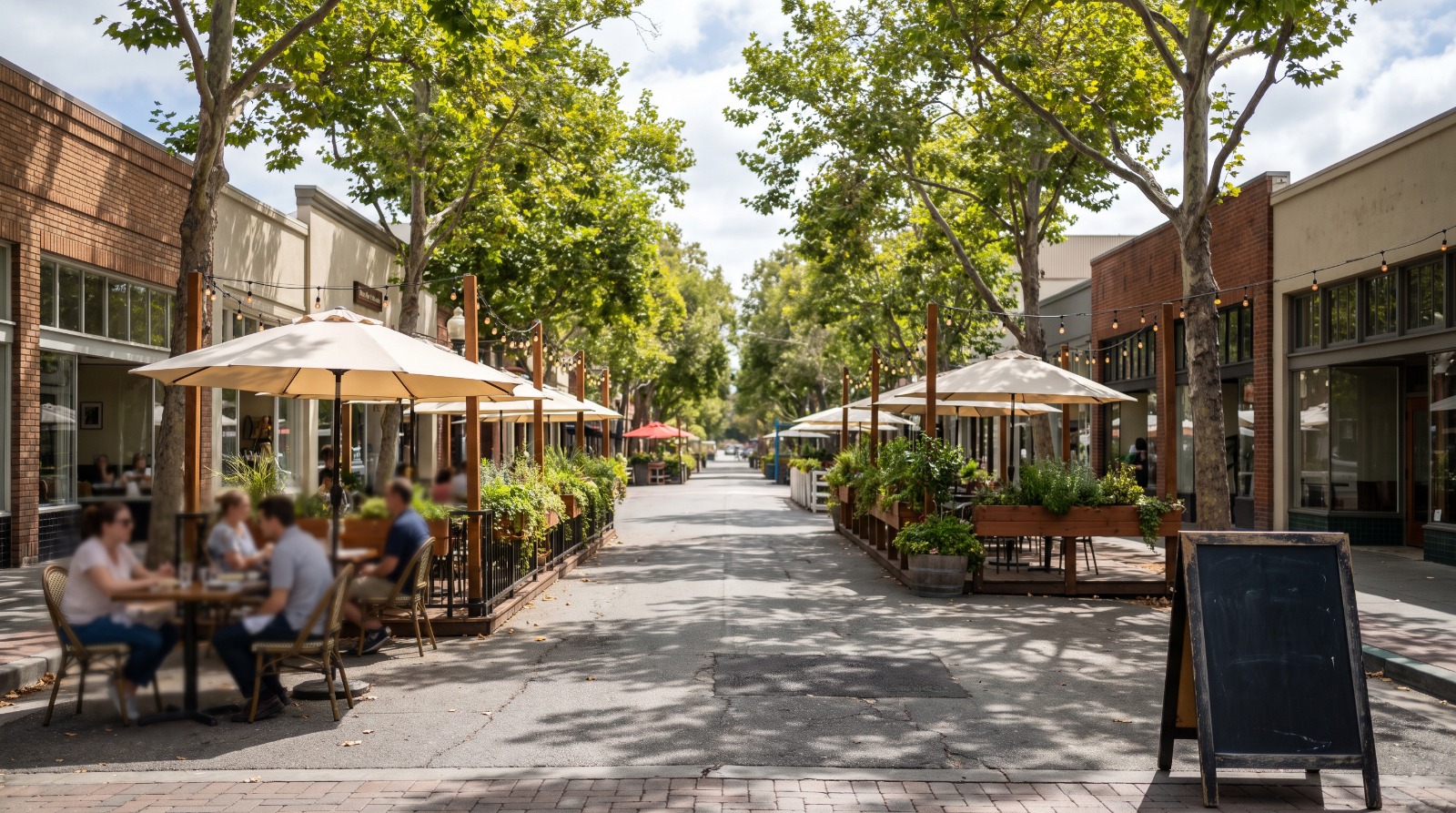
The pedestrianized California Avenue promenade in Palo Alto, the station area now absorbing most of the city's new transit-oriented apartments. Photo: Houseberry
About $1.05 million a year. That is the household income it takes to buy the median Palo Alto home right now, at Tuesday's 6.69 percent with 20 percent down, plus $780,000 in cash at the closing table. Hold that number, because every conversation about new apartments in Palo Alto eventually collides with it.
The news is that a preliminary application landed for 98 apartments at 2181 Park Boulevard, seven stories, 600 feet from the California Avenue Caltrain platform, with zero parking spaces. The more interesting story is where all of these filings are going. Four of Palo Alto's nine SB 79 projects sit near California Avenue and hold 204 of the 341 proposed homes, 60 percent of the units from 44 percent of the projects. Downtown got the headlines. Cal Ave got the housing.
The building: 98 apartments, 600 feet from a train, no parking
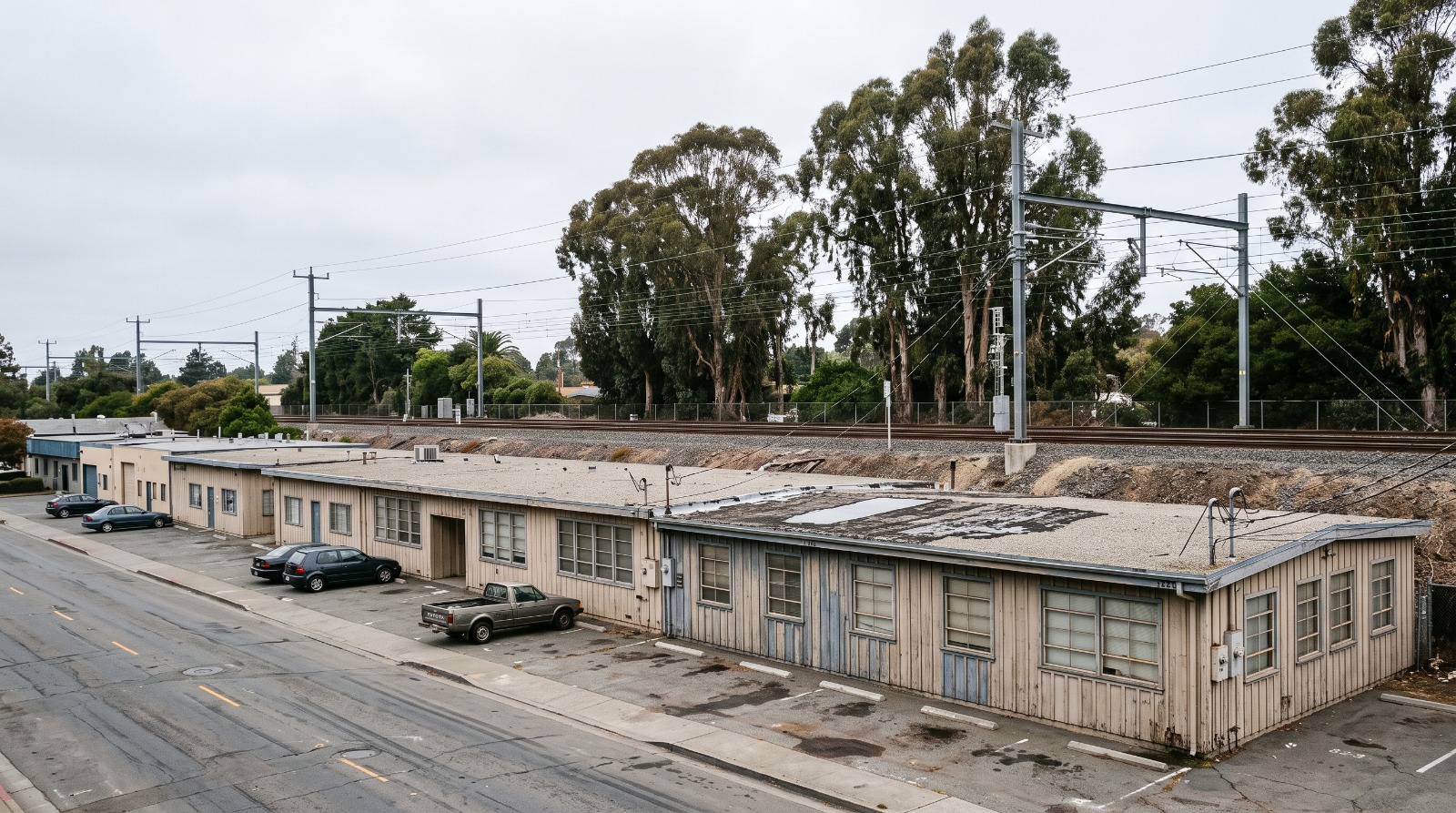
The proposal replaces three 1958-era wood-frame office buildings at 2151, 2181 and 2211 Park Boulevard with roughly 101,500 square feet of housing in seven stories at 75 feet. About 13 of the 98 units would be deed-restricted for lower-income households. The applicant is Brion McDonald, through 2211 Park Boulevard LLC. No architect of record has been credited. The existing buildings have 45 parking spaces between them; the replacement has none for cars, with the ground floor given to a lobby, an amenity lounge and bike parking.
The site is zoned RM30, which on its own would support roughly eight units. That contrast is the entire point of SB 79: 600 feet from a Caltrain platform, the state's transit-oriented standards override the local number, and eight becomes ninety-eight.
Two caveats before anyone gets excited or upset. This is a preliminary application, which starts a 180-day clock to file a formal one. It is not an approval and not a permit. And 2181 Park Boulevard does not appear on the city's list of nine SB 79 pre-applications, all of which were filed between July 1 and July 15 before Palo Alto's interim ordinance took effect on July 16. The first public report of this proposal came on July 29. Whether that makes it a tenth filing outside the window, or a ninth-window filing the city has not posted yet, is the single most consequential unanswered question about it, because it decides whether the project gets full SB 79 height or the halved interim standards. Its 75-foot ask is full Tier 1.
The filings went to Cal Ave, not downtown
We wrote in July that the SB 79 rush had clustered downtown rather than on El Camino. On project count that held. On homes it does not, and the corrected arithmetic is worth publishing plainly.
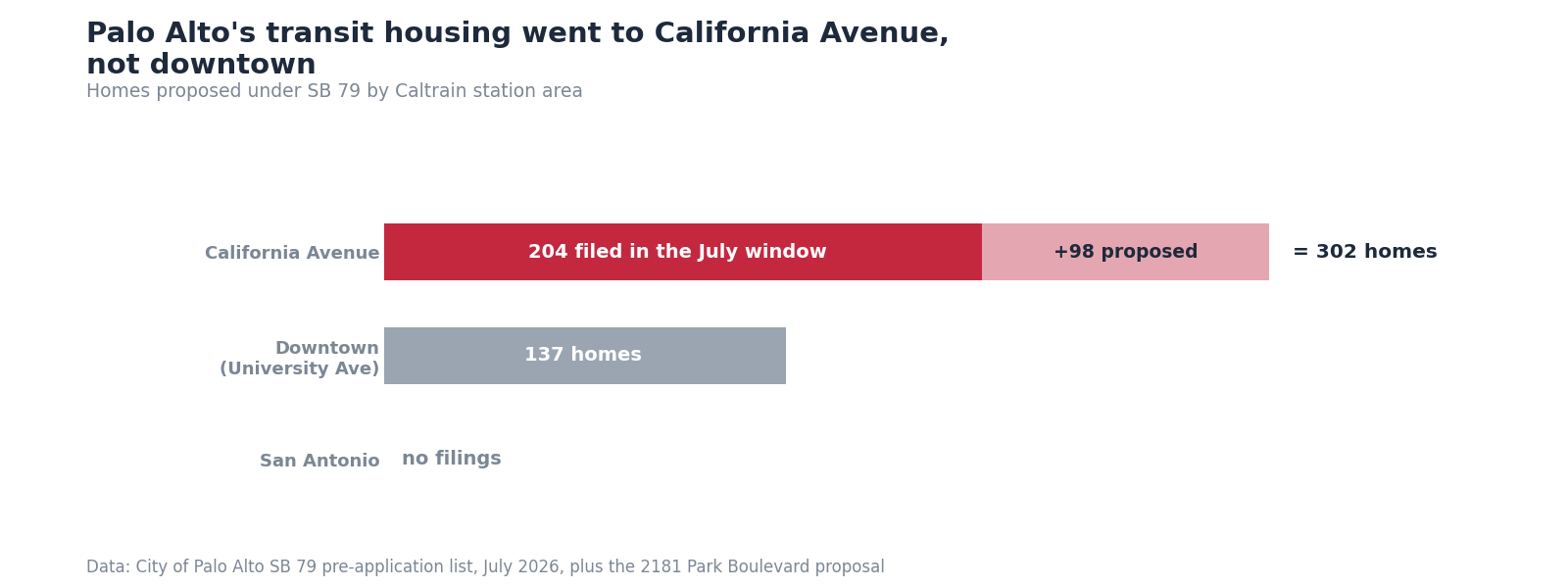
| Station area | Projects | Homes |
|---|---|---|
| California Avenue | 4 (2455 El Camino Real, 555 College Ave, 414 California Ave, 2497 High St) | 204 |
| Downtown / University Ave | 5 (332-350 Forest Ave, 127 Lytton, 525 Hamilton, 135 University, 340 Palo Alto Ave) | 137 |
| San Antonio | 0 | 0 |
| City total filed in the July window | 9 | 341 |
Planning Director Jonathan Lait put the confirmed total at nine projects, 341 homes and about 395,310 square feet. Our July post said seven projects and 253 homes, which was the count available at the time. The two it missed, 414 California Avenue at 39 units and 2497 High Street at 19, both sit at Cal Ave, which is exactly what flipped the geography. Add 2181 Park Boulevard and the station area reaches 302 homes to downtown's 137. Add the separate 382-unit builder's remedy project at 156-164 California Avenue and there are roughly 684 proposed homes inside one station area.
The apartments landed where the houses are cheapest
This is the part no competitor can write, and it is the honest tell about how upzoning actually distributes in a wealthy city.
| Neighborhood | Median, July 2026 | Rank of 27 | Schools | Safety | Income to buy |
|---|---|---|---|---|---|
| Ventura | $2.66M | 22nd | 4.6 | 3.5 | about $719,000 |
| College Terrace | $3.21M | 20th | 4.7 | 3.3 | about $868,000 |
| Evergreen Park | $3.47M | 25th | 4.7 | 2.7 | about $938,000 |
| Southgate | $4.22M | 18th | 4.8 | 3.3 | about $1,141,000 |
| Old Palo Alto | $6.06M | 4th | 4.8 | 4.7 | about $1,638,000 |
| Palo Alto citywide | $3.90M (June 2026) | - | 4.8 | 3.9 | about $1,054,000 |
Income figures are my own calculation at 6.69 percent, 20 percent down, 1.2 percent property tax, 0.18 percent insurance and a 28 percent front-end ratio. Prices come from each neighborhood's 12-month price history; the citywide series ends a month earlier than the neighborhood series, which is why it reads June.
All four Cal Ave neighborhoods sit in the bottom half of our ranking of Palo Alto's 27 neighborhoods, and three of the four are among the city's least expensive. Ventura, at $2.66 million, is 32 percent below the citywide median and ranks 24th of 27 for amenities. Meanwhile the top four neighborhoods, Duveneck-St. Francis, Greenmeadow, Leland Manor and Old Palo Alto, absorbed exactly zero SB 79 filings. Old Palo Alto's median rose 17.6 percent over the last twelve months and no one has proposed a single apartment there.
That is not a conspiracy. It is land economics. Transit-oriented upzoning follows train stations, and in Palo Alto the train runs past the commercial and light-industrial edges, not through the estate blocks. But it does mean the density conversation and the wealth conversation are happening in different postal districts, and residents near the stations have noticed. At an August hearing on the Ventura project, one neighbor told the Daily Post he moved here to live in Palo Alto, not Manhattan.
What this does, and what it does not
It does add rental supply next to a train, which is the most useful kind of housing this region can build. All 439 proposed homes together amount to roughly 1.3 years of Palo Alto's recent permitting pace, which sounds small until you remember the pace: the city has permitted 680 homes against a 6,086-unit state obligation for 2023 to 2031, or 11.2 percent, and just 55 of an 896-unit low-income target. Against that record, 439 apartments in six weeks is the fastest thing that has happened to Palo Alto housing in years.
It does not change who can buy a house here. The whole SB 79 pipeline equals 7.2 percent of the city's eight-year obligation. The 13 deed-restricted units at 2181 Park Boulevard are 0.53 percent of Palo Alto's 2,452-unit lower-income requirement. And the affordability gap is wider than the deed restrictions reach: a market-rate one-bedroom in Palo Alto rented for a median $3,400 a month as of August 10, 2026, which needs about $136,000 a year at the 30-percent rule, while Santa Clara County's low-income limit for a single person is $113,700. A market-rate one-bedroom in this city is out of reach for someone who officially qualifies as low income, by roughly $22,000 a year.
So the accurate claim is narrow and still worth making. These buildings will let a few hundred more households live within walking distance of a Caltrain platform in a city that scores 4.8 for schools. They will not move a $3.9 million citywide median, and anyone selling them as an affordability fix is overselling.
What to watch
Three things. Whether 2181 Park Boulevard shows up on the city's SB 79 list, which settles the interim ordinance question. How many of the nine convert from preliminary to formal applications before their 180-day clocks expire, because a preliminary application is free and a formal one is not. And whether the Cal Ave concentration keeps going, given that the parallel El Camino Real build-out and the July filing rush are now feeding into the same square mile.
If you are comparing Palo Alto neighborhoods this fall, the practical read is that Ventura and Evergreen Park are about to get denser and better served by transit, and they are already the two cheapest ways into a city with a 4.8 school score. Whether that reads as a discount or a warning depends on what you want out of a block. It is at least a knowable trade, which is more than most Palo Alto listings offer.
Sources
- San Francisco YIMBY, “Preliminary Application Filed For 2181 Park Boulevard, Palo Alto,” August 8, 2026
- City of Palo Alto, Status of the City's Temporary SB 79 Implementation Regulations
- SV@Home, Palo Alto 2023-2031 RHNA allocation and permit progress
- Santa Clara County 2026 income and rent limits, effective May 29, 2026
- Zumper, Palo Alto rent research, August 10, 2026
- NerdWallet, mortgage rates for Tuesday, August 11, 2026
- Palo Alto Daily Post, “‘Not Manhattan’: Palo Alto neighbors fight high-rise transit developments,” August 6, 2026
- City of Palo Alto, 156 California Avenue project page
- Houseberry, all 27 Palo Alto neighborhoods ranked
- Houseberry, Palo Alto city guide and price history
All information provided on this website including but not limited to - school ratings, safety, amenities, user opinions, and property data - is for general informational purposes only. We do not guarantee its reliability, accuracy, or completeness. Users should independently verify information and consult appropriate professionals as needed. By using this website, you agree Houseberry is not responsible for actions, decisions, or consequences arising from reliance on the information provided
houseberry.com - CA DRE# 01847391
 Bay East ©2025. CCAR ©2025. bridgeMLS ©2025. Information Deemed Reliable But Not Guaranteed. This information is being provided by the Bay East MLS, or CCAR MLS, or bridgeMLS. The listings presented here may or may not be listed by the Broker/Agent operating this website. This information is intended for the personal use of consumers and may not be used for any purpose other than to identify prospective properties consumers may be interested in purchasing. Data last updated at September 25, 2026 12:00 AM